
Unlost: from a skin sample in the field to living cells at −196 °C
Book a call, get a price rangeUnlost banks living cells from endangered animals before they are gone: a skin biopsy in the field, a cold chain to a −196 °C vault, the cells grown and frozen alive. We built it from scratch: the name and the world of cleared specimens, the mark in Rive, the Field app for the vet and the Vault console for the lab, specimens in Blender on real museum scans and CT, and the launch.
- Project
- An Alterra Studio project: we built the company's brand, product and launch from scratch
- Stage
- Conservation biotech, pre-launch
- Services
- Naming, the world, logo and app icon, the Field app and its edge states, the Vault console, specimens in Blender, the clearing sweep, Rive motion, the product film, the board, applications
- Tools
- Blender on CC0 and CC BY museum scans and CT, Rive, HTML screens rendered with Playwright, three.js, Nano Banana for the key art and the photo plates
Glass for the record, emerald for what lives
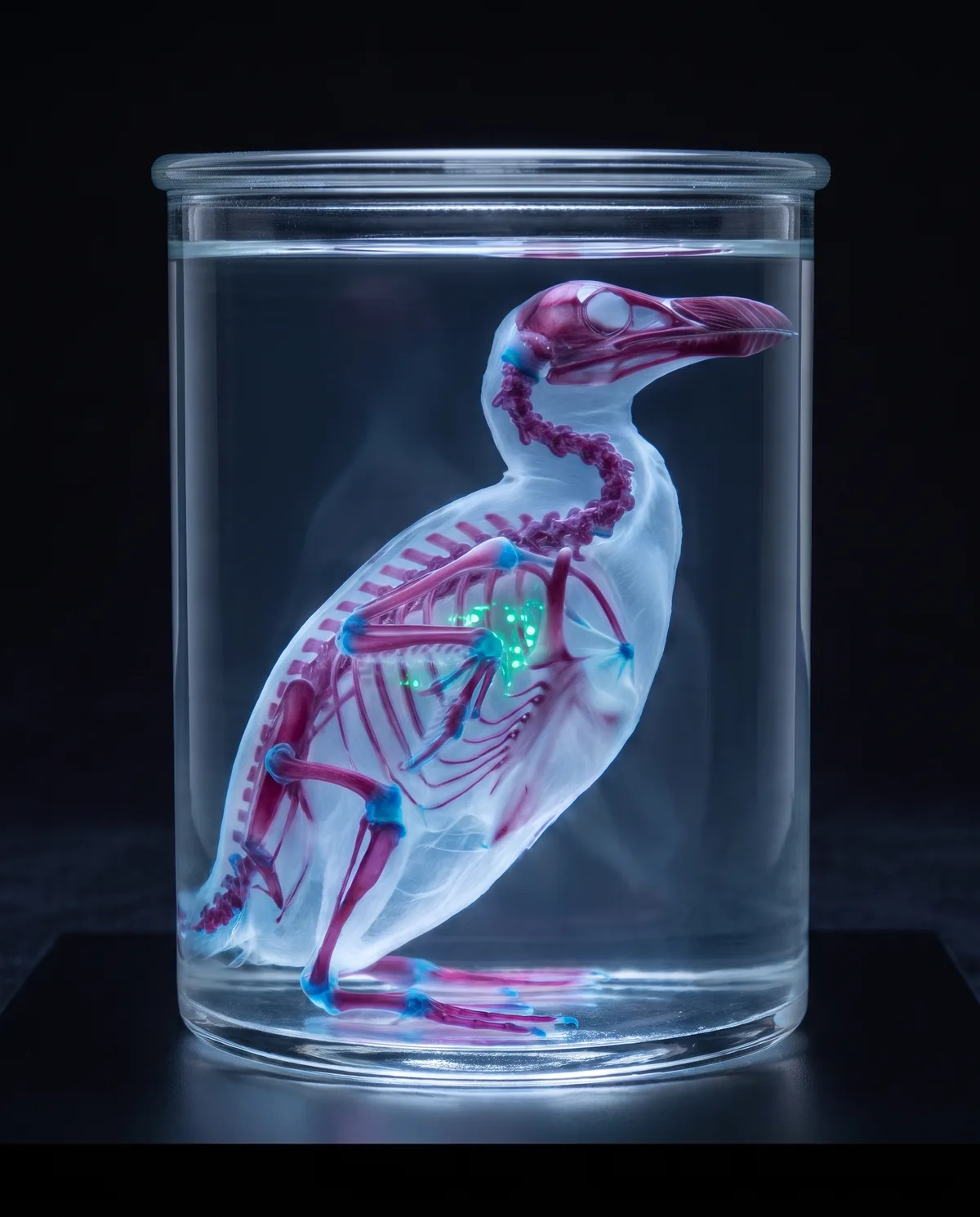
Unlost banks living cells from endangered animals before they are gone. Its world is the cleared specimen: flesh made clear as glass, bone stained magenta, and one emerald spark where the cells are alive.
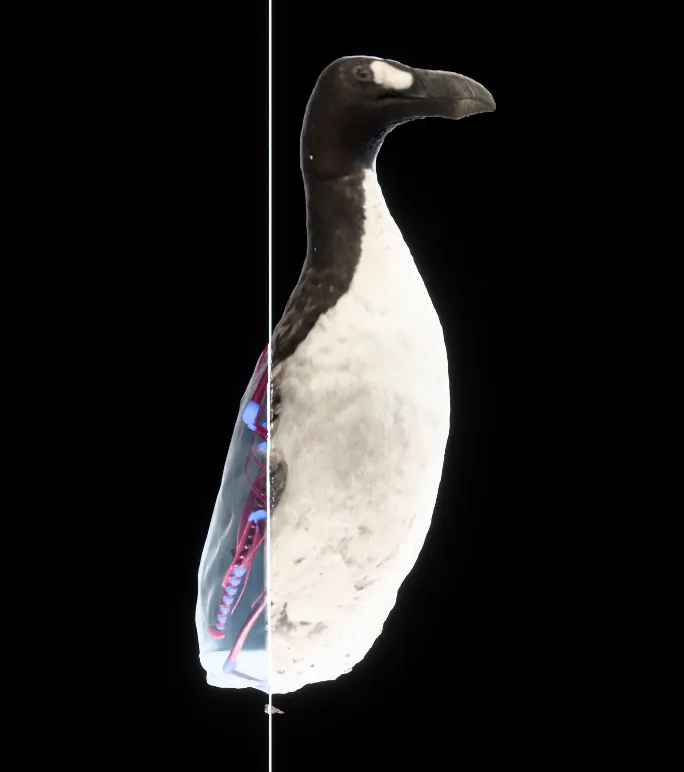
Pinguinus impennisGreat auk · the Icelandic Institute of Natural History's mount, model by Nils Gies, CC BY 4.0 · cleared in Blender
Slice 03 / 10Clearing
A sample the size of a grain of rice
Every biobank asks donors to fund a freezer; our partners need to see a sample go from a named animal to living cells in the vault, with a receipt, not another photo of a dewar in fog.
Unlost banks living cells from endangered animals: a biopsy in the field, a cold chain to the vault, the cells grown and frozen alive. The same vault backs its revival programmes.
We built the company from scratch: the name, the world, the mark, the Field app for the vet, the Vault console for the lab, the specimens in Blender, the motion in Rive, and the launch.
of skin biopsies from six endangered wild Chilean mammals grew into healthy cell lines. Samples kept at 4 °C for a week in the field still grew.
between a ferret's cells going into the Frozen Zoo in 1988 and Elizabeth Ann, cloned from them, being born in December 2020.
species are banked as living cell lines in the oldest frozen zoo, from over 11,500 animals, in liquid nitrogen.
We scored ten funded homepages in the category. They average 13.0 out of 24, and none shows that a stored cell is alive. Here is what they share, and what Unlost leaves out.
- 7 of 10
- A mood photo or video of an animal, a field or a microscope as the hero
- 6 of 10
- A slogan or a promise about life and the future
- 5 of 10
- A cold blue glow over a fifth of the first screen
- 2 of 10
- Steel tanks in nitrogen fog and gloved scientists
- 2 of 10
- Animals as backdrop, with no name and no record
Lost, then unlost
A register of animals we have lost, each struck through at the year of its last record. One strike can be lifted, because that animal's cells are already banked.
1 Living cell lines from 12 northern white rhinos are frozen in the San Diego Zoo Wildlife Alliance's Frozen Zoo.
Years of last record and the cell lines: Oxford University Museum of Natural History, Natural History Museum, London, British Birds, South African History Online, Smithsonian NMNH, Tasmanian Museum and Art Gallery, AmphibiaWeb, National Geographic, Scientific American, San Diego Zoo Wildlife Alliance.
The vet's app, from the animal to the vault
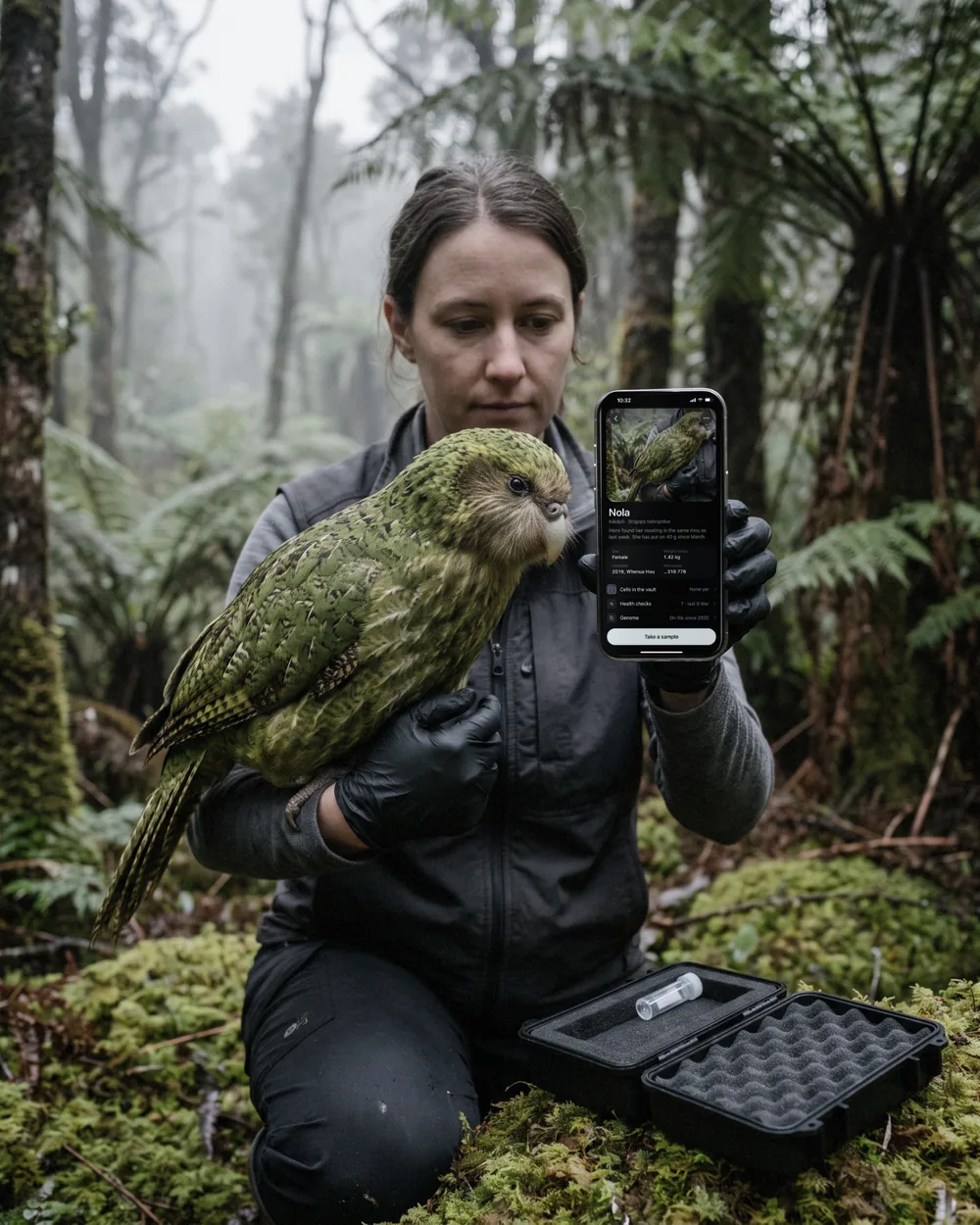
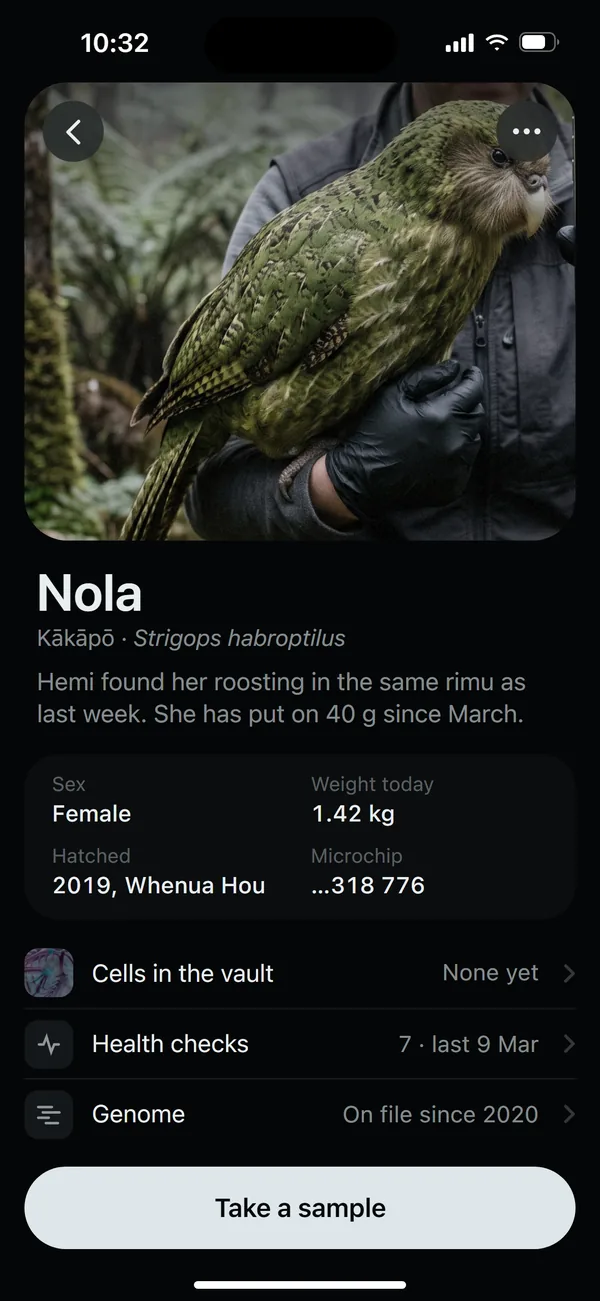
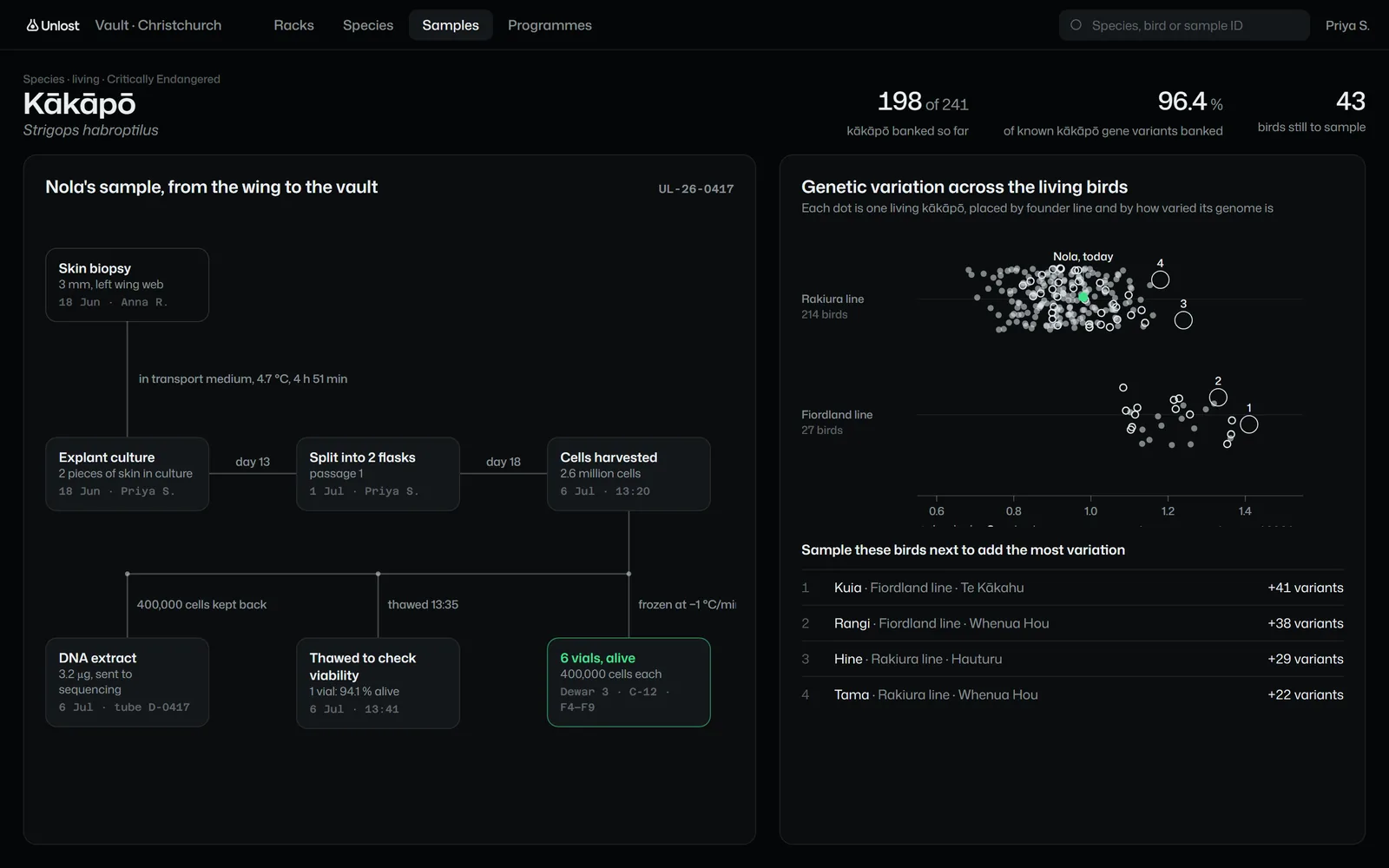
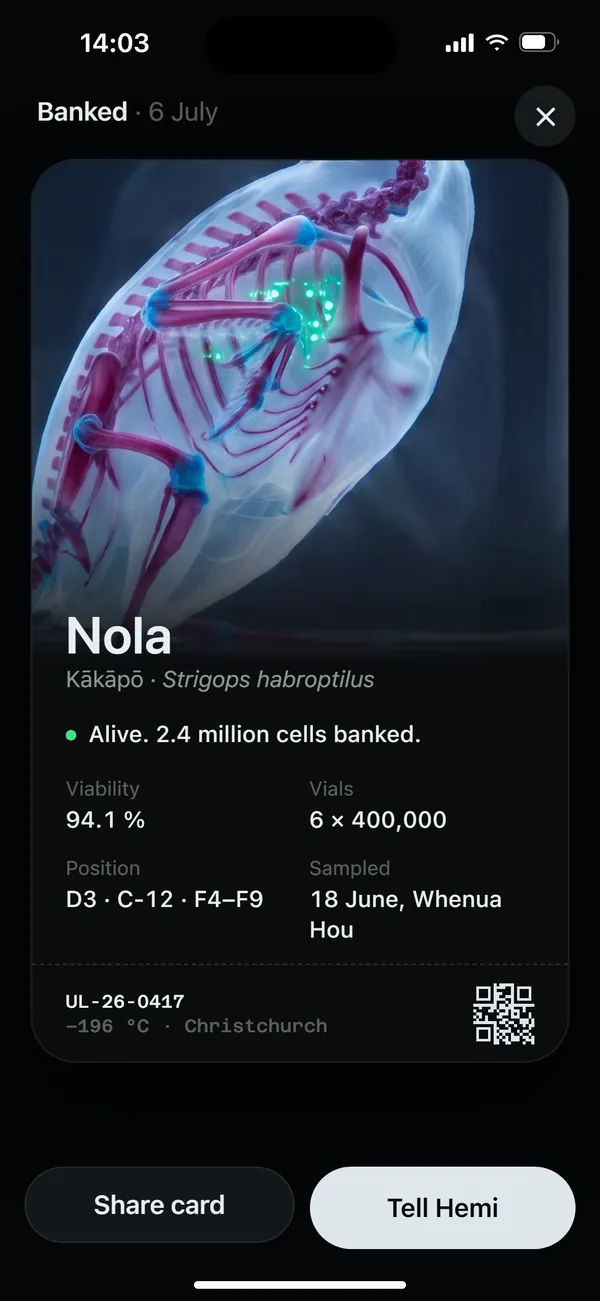
Identify the animal, take the sample, seal the kit, and follow it until the lab says the cells are alive. Tap through it as Anna, a wildlife vet, sampling Nola, a kākāpō.
Unlost Field
01Identify. Her microchip reads Nola, a kākāpō.
Tap the phone or Play. The last screen waits for the stain.
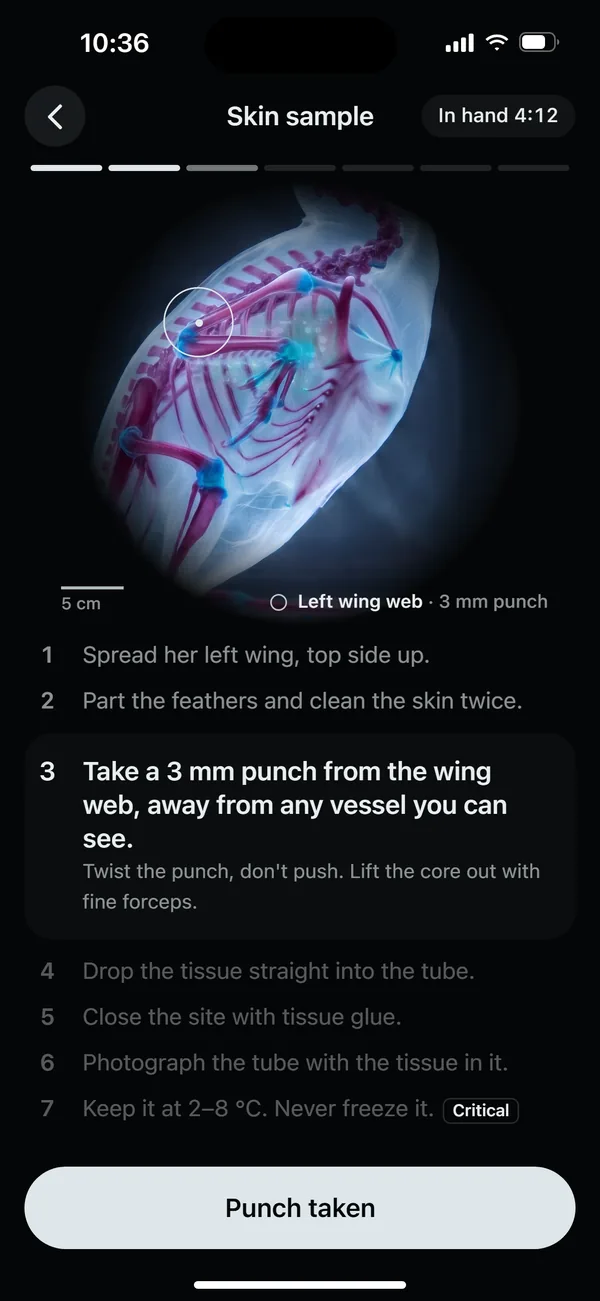
Sampling stresses the animal, and I won't risk a critically endangered bird for a tube.
The sample screen is seven numbered plain sentences, from spreading the wing to a small punch from the wing web away from any vessel, gluing the site and keeping the tube cold but never frozen. A timer shows how long the bird has been in hand, and the step that matters most is marked critical.
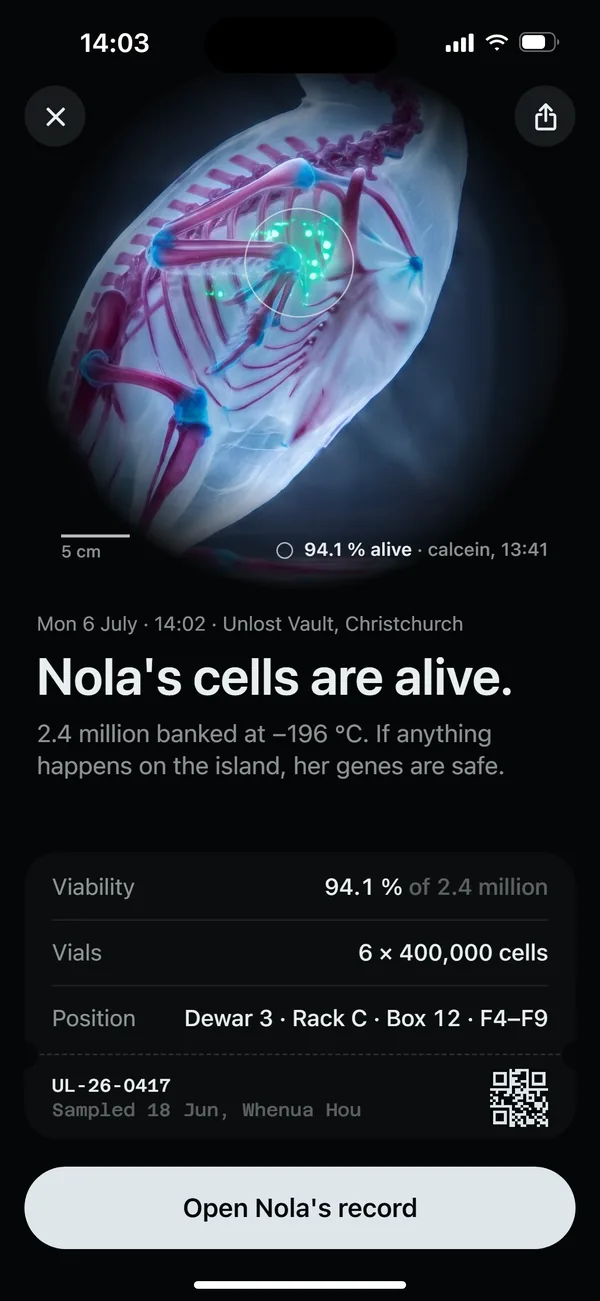
We'd be paying to freeze tubes. How do we know the cells are alive, and will still be in 30 years?
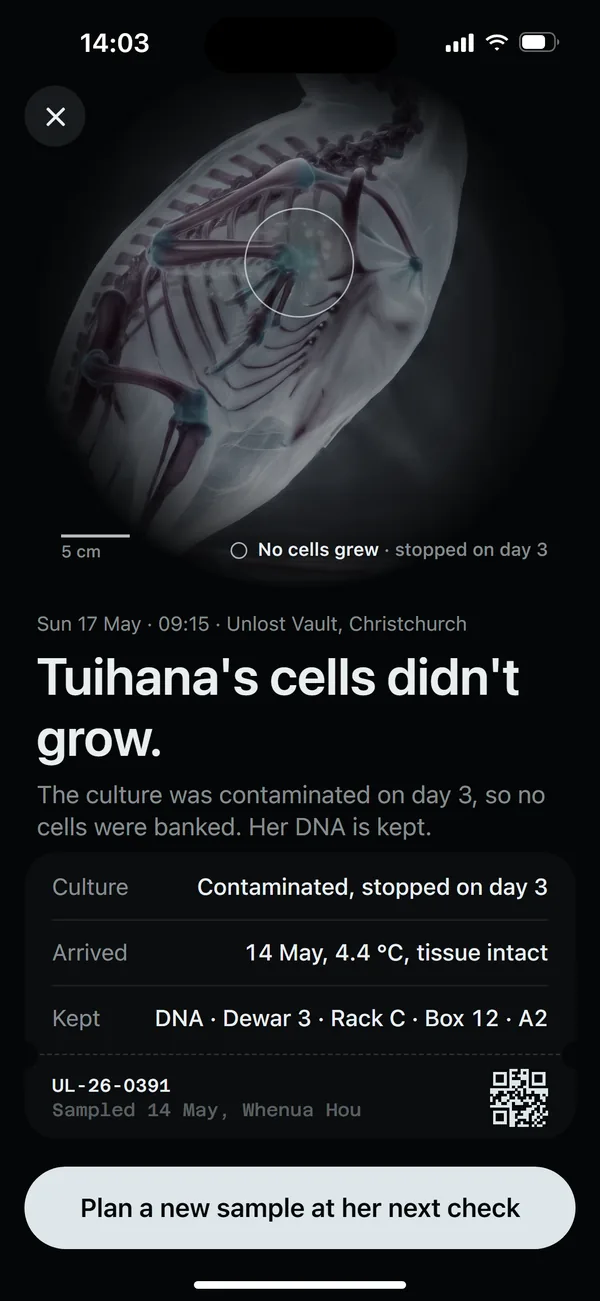
When the lab confirms the culture, her cleared chest lights where the live-cell stain glows green. One line underneath gives the share alive and how many cells were banked, and the vault label comes with it. If a culture fails, the same screen says why and plans the next sample.
Every edge state, designed
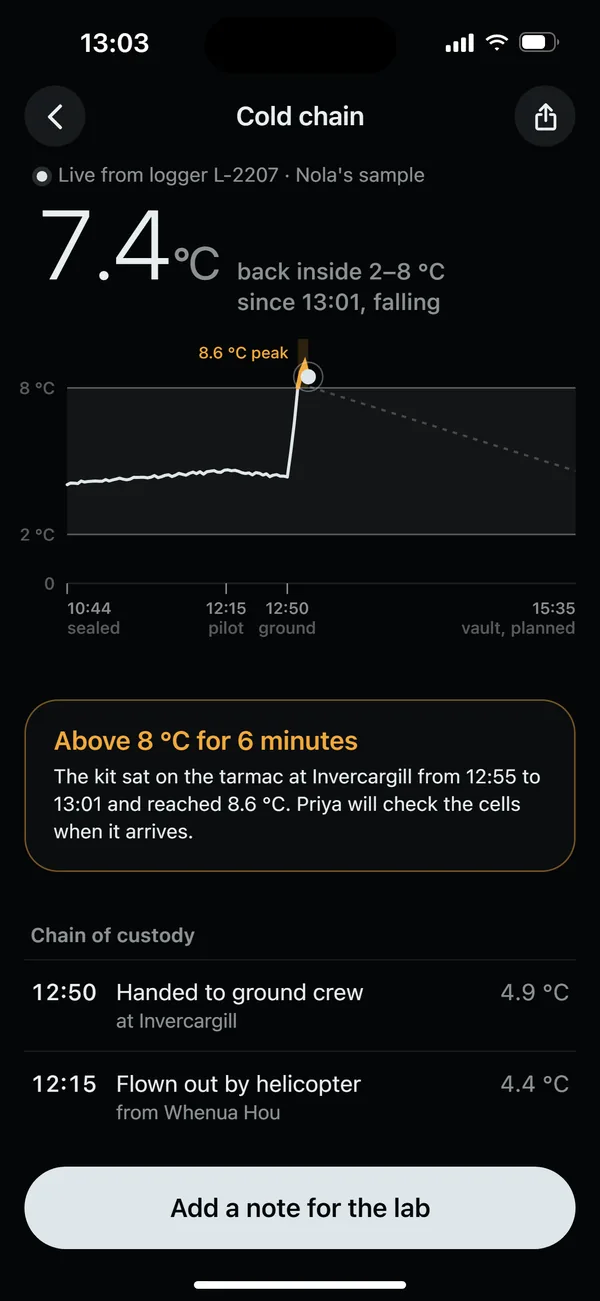
A kit left on a hot tarmac, a culture that never grew, a logger that goes quiet in flight: each has its own screen, so the vet always knows what happened and what to do next.
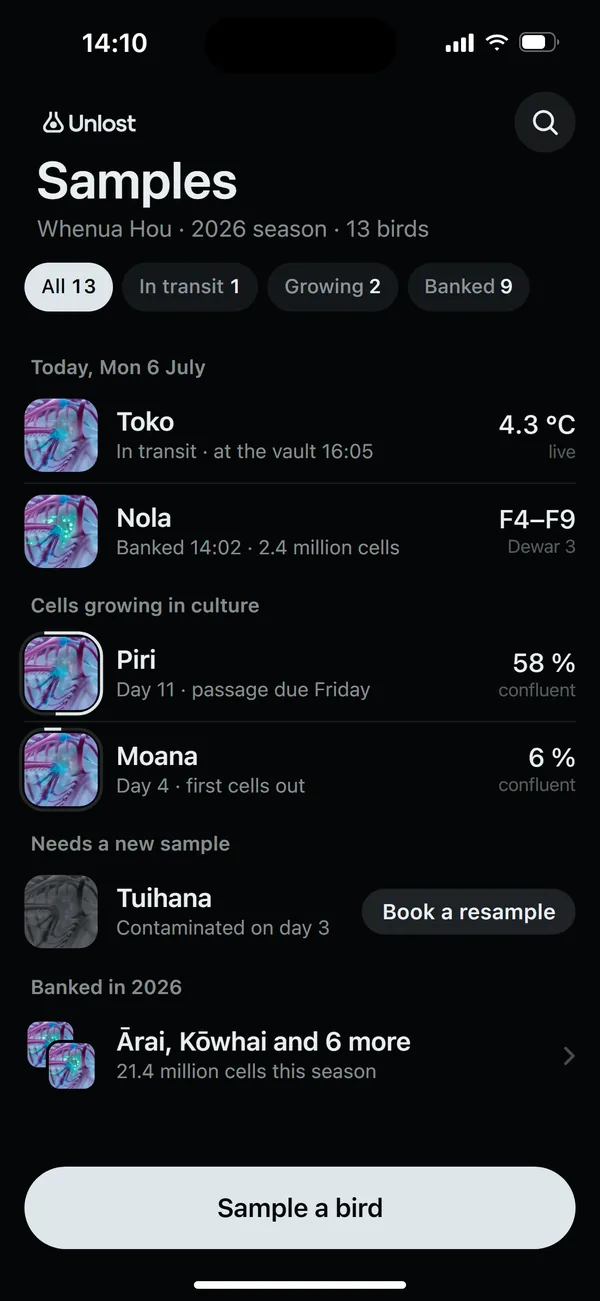
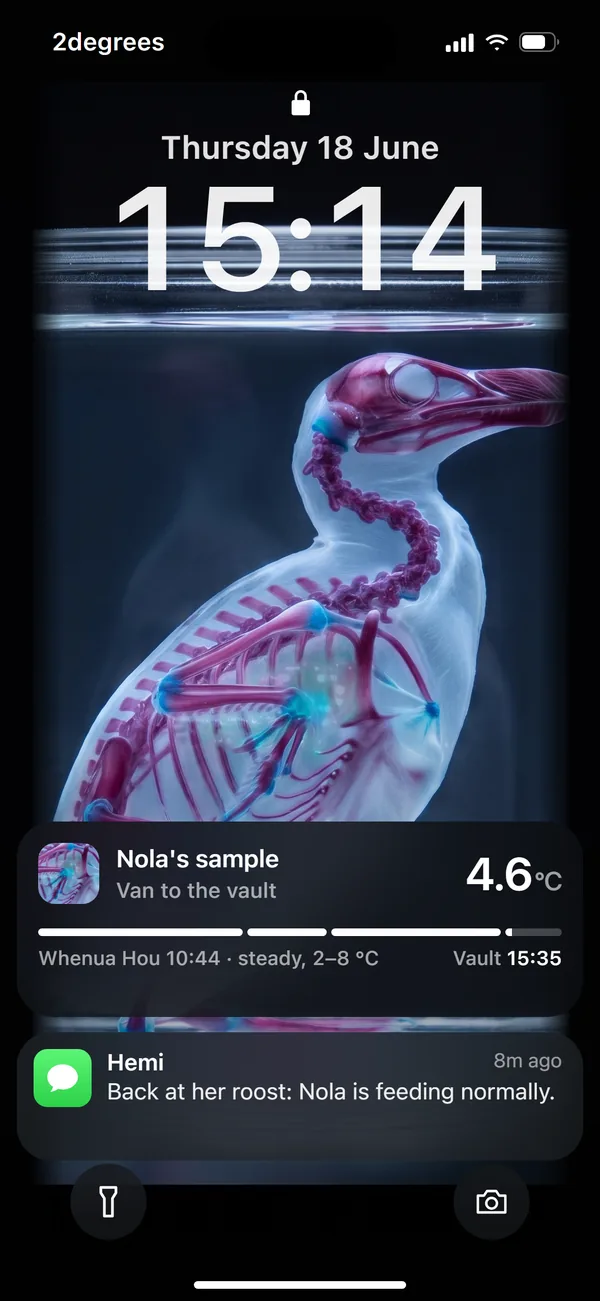
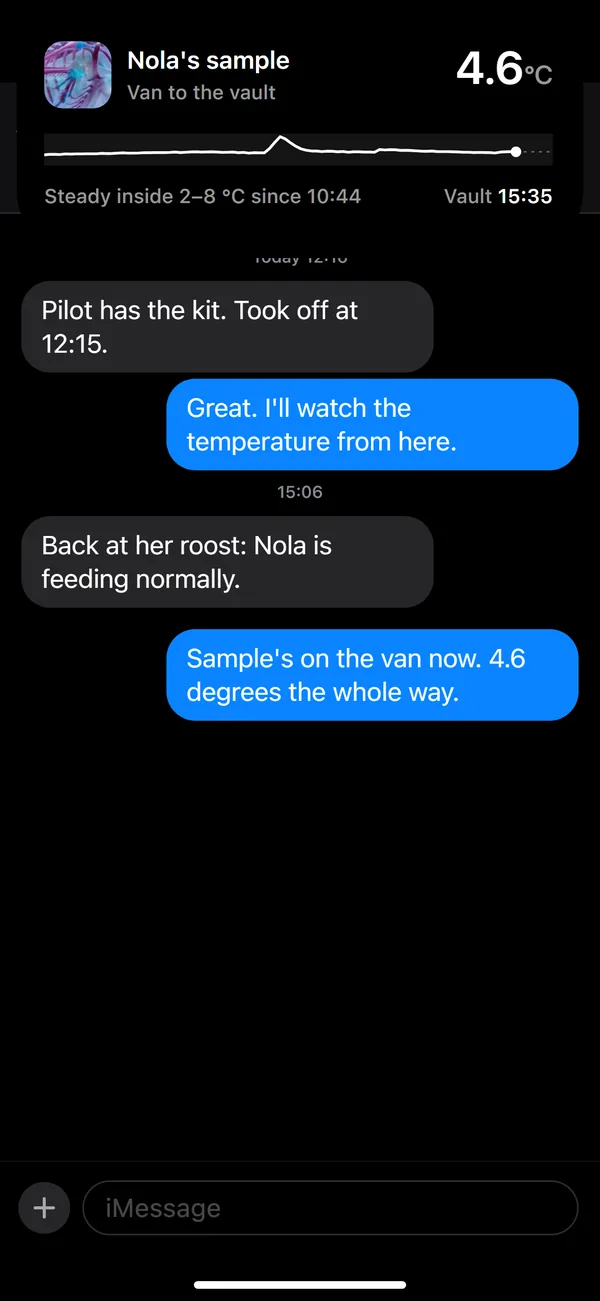
Between 2 and 8 °C, the whole way
One logger rides with the sample, from the island by helicopter, plane and van to the vault. The vet watches it on her Lock Screen; the lab sees who held it, and how warm it got.
Nola's sample, 4 h 51 min
Move along the trace to read the chain of custody. Then see the day it sits too long on the tarmac.
- Time
- 15:12
- Inside the kit
- 4.6 °C
- Who has it
- The vault van
- Christchurch Airport to the vault
The lab's console, and a specimen you can cut
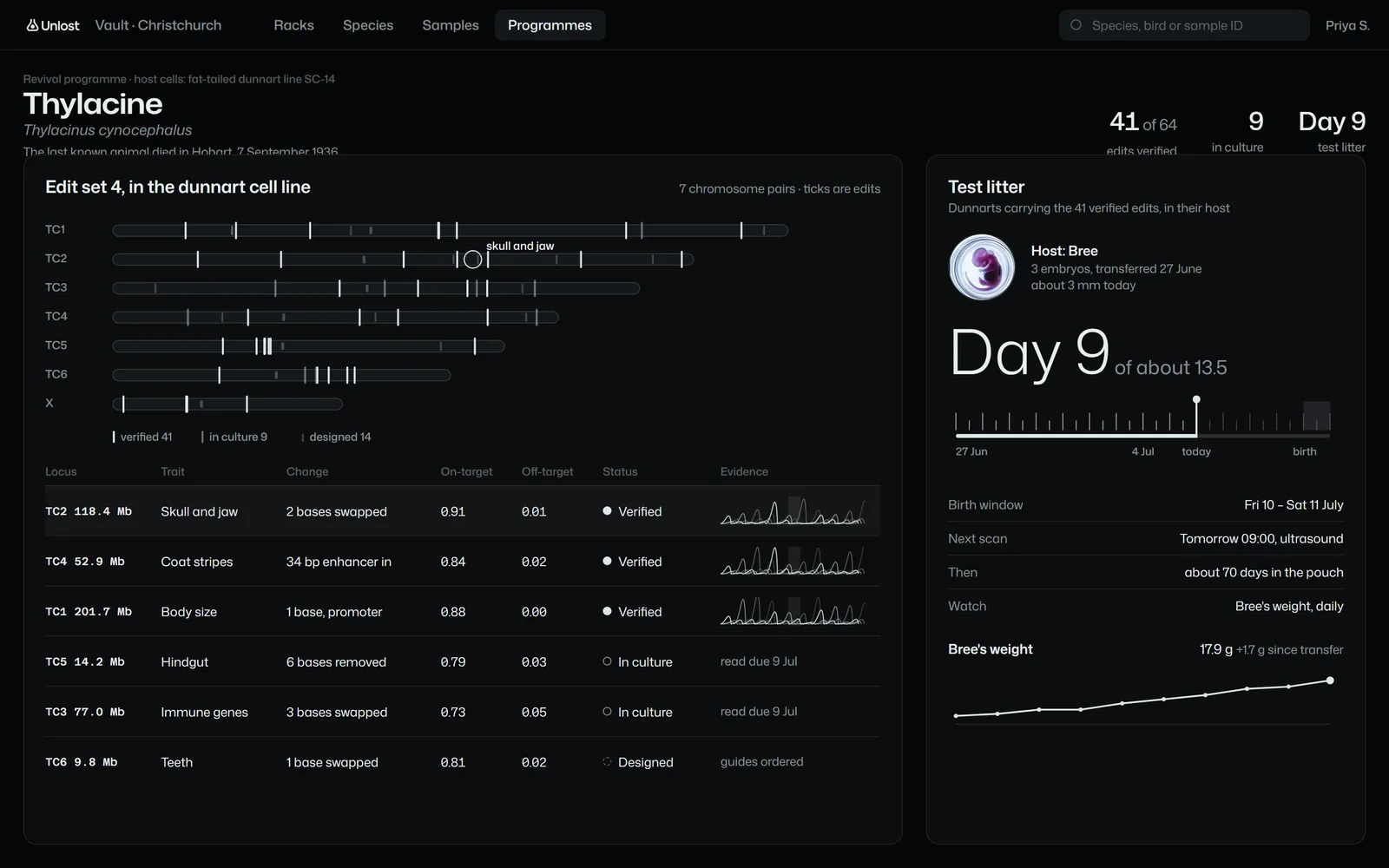
Racks and positions, every species as a cleared specimen, lineage and diversity, and the revival programmes. The species viewer is live below, on a real CT.
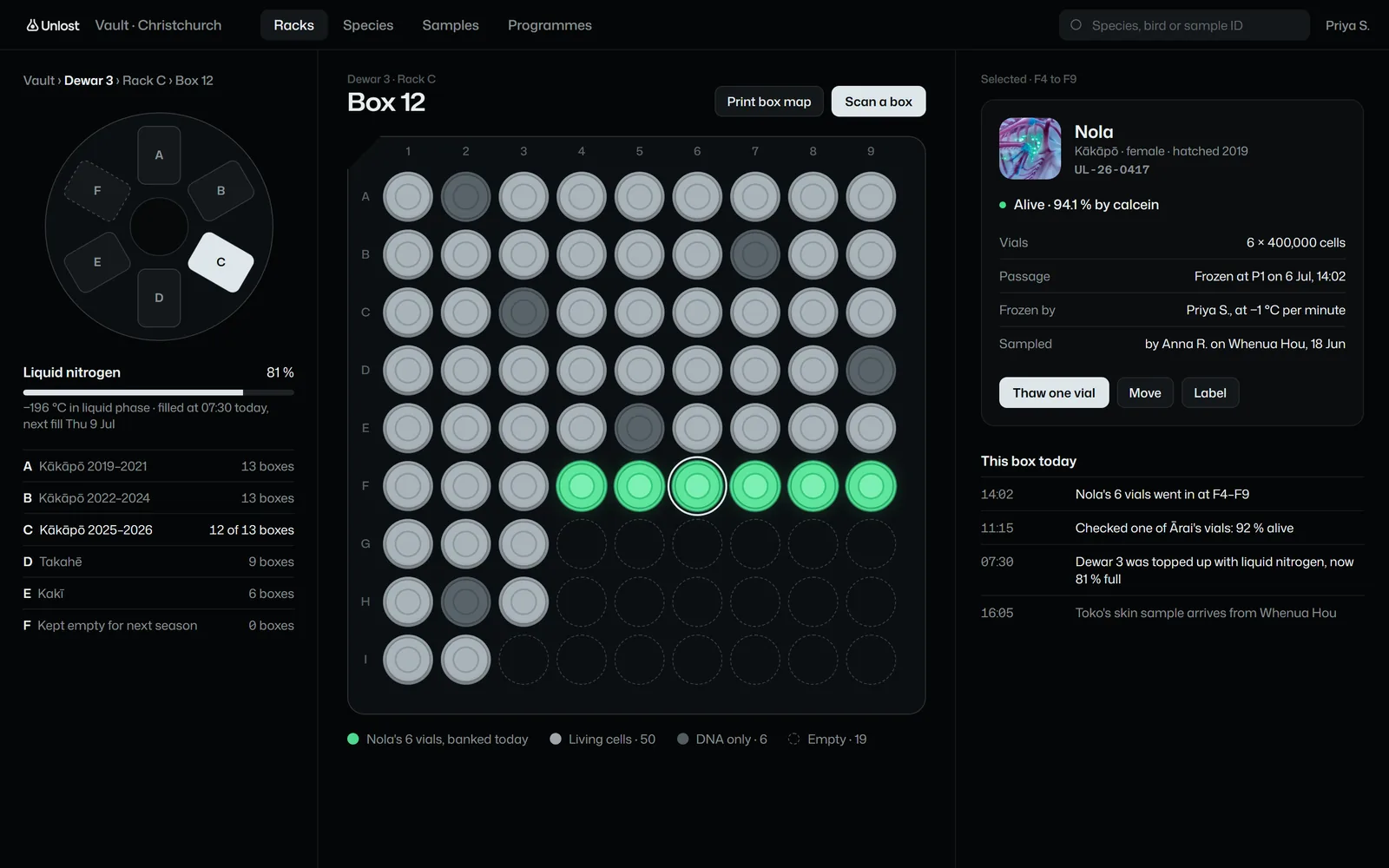
Samples arrive with no paperwork, and I can't tell whose cells are in which box.
The vault draws the dewar from above and the box as a box. Pick a position and it opens to the bird, the tube code, the share of cells alive, who froze it and when, and who sampled her, where and on what day. Every vial that went in or out today is in the box's log.
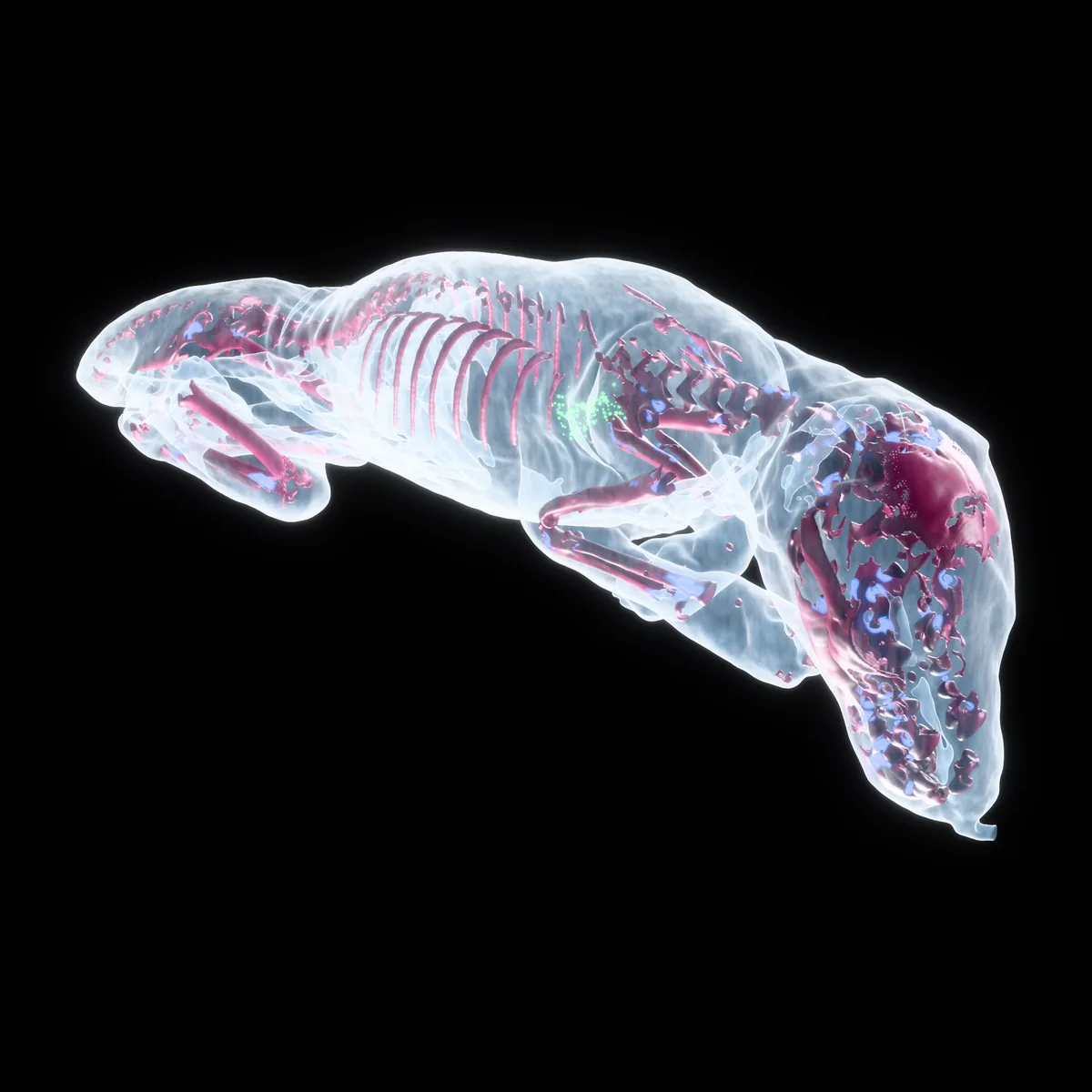
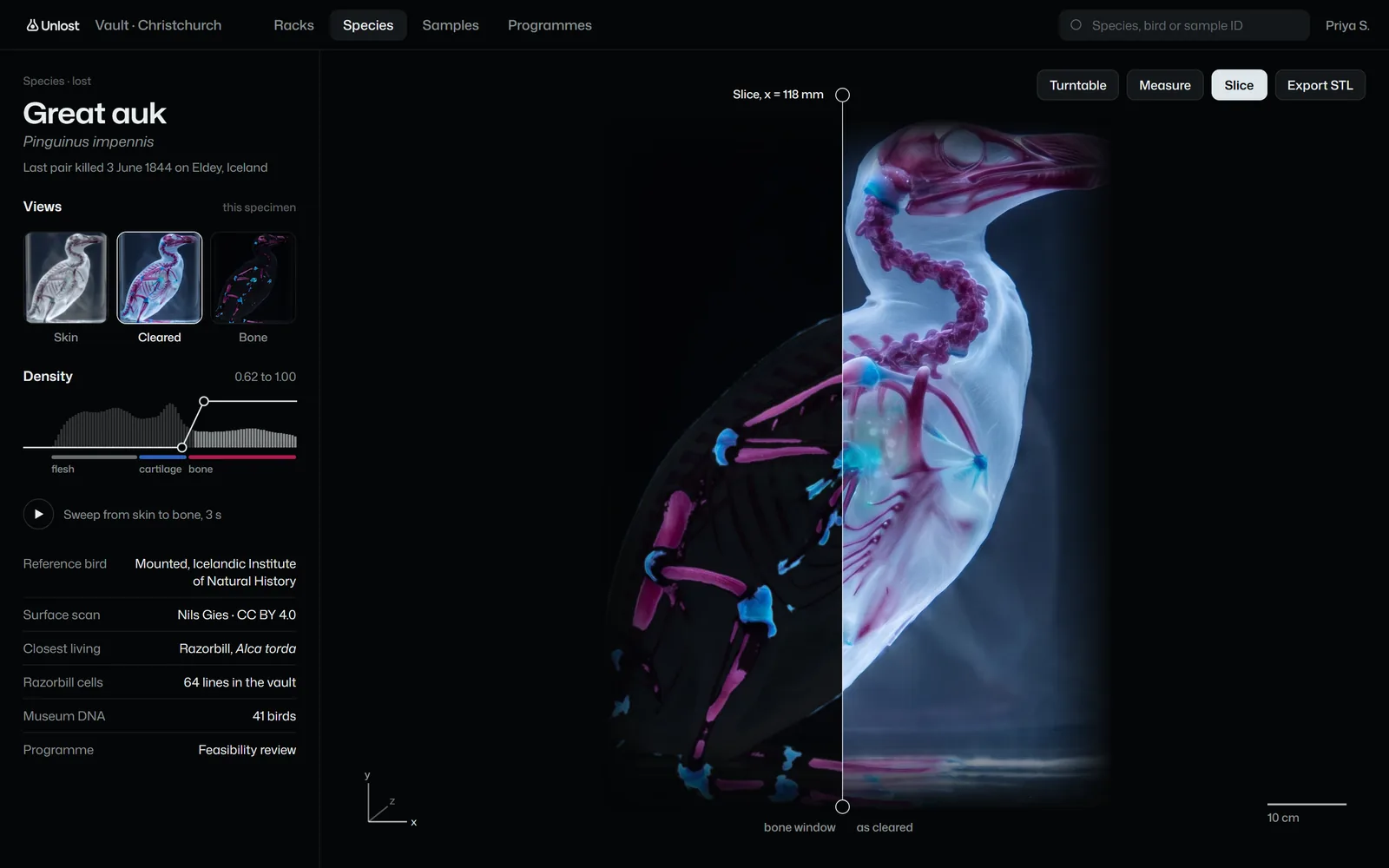
Thylacinus cynocephalusPouch young AMS P762, 12 weeks · micro-CT, Newton et al. 2018, CC0
The CT loads as you arrive
The species viewer, live
A thylacine pouch young from a real micro-CT. Drag to turn it, move the slice through it, and sweep from skin to bone.
1,364 CT slices meshed at two densities, skin and bone, and coloured by the bone's own density. 1.8 MB, loaded only when you get here.
A flask, and one living cell
The mark is a flask with a dot. The dot is the only part that ever turns emerald, and only when something is alive.
The logo, live in Rive
A drop falls into the flask, blooms into the dot, turns emerald and beats once. Point at it, or tap it, to play it again.
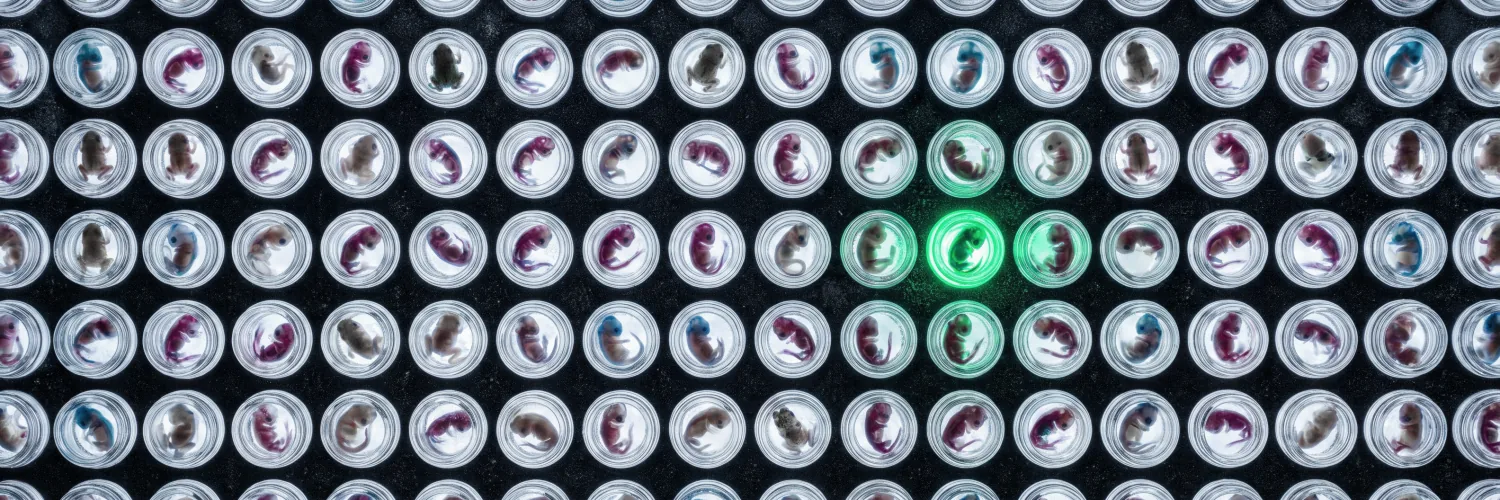
Specimens, cleared
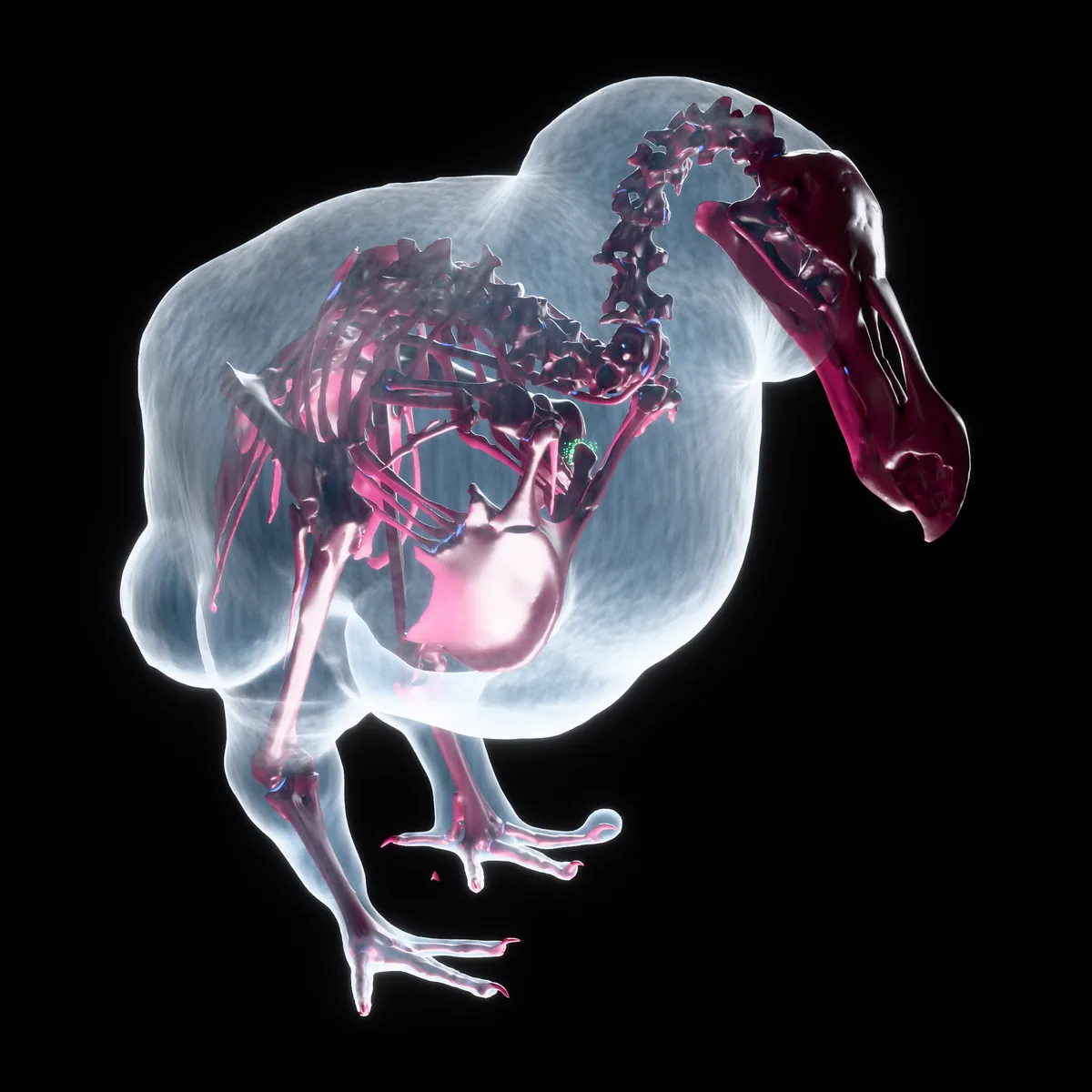
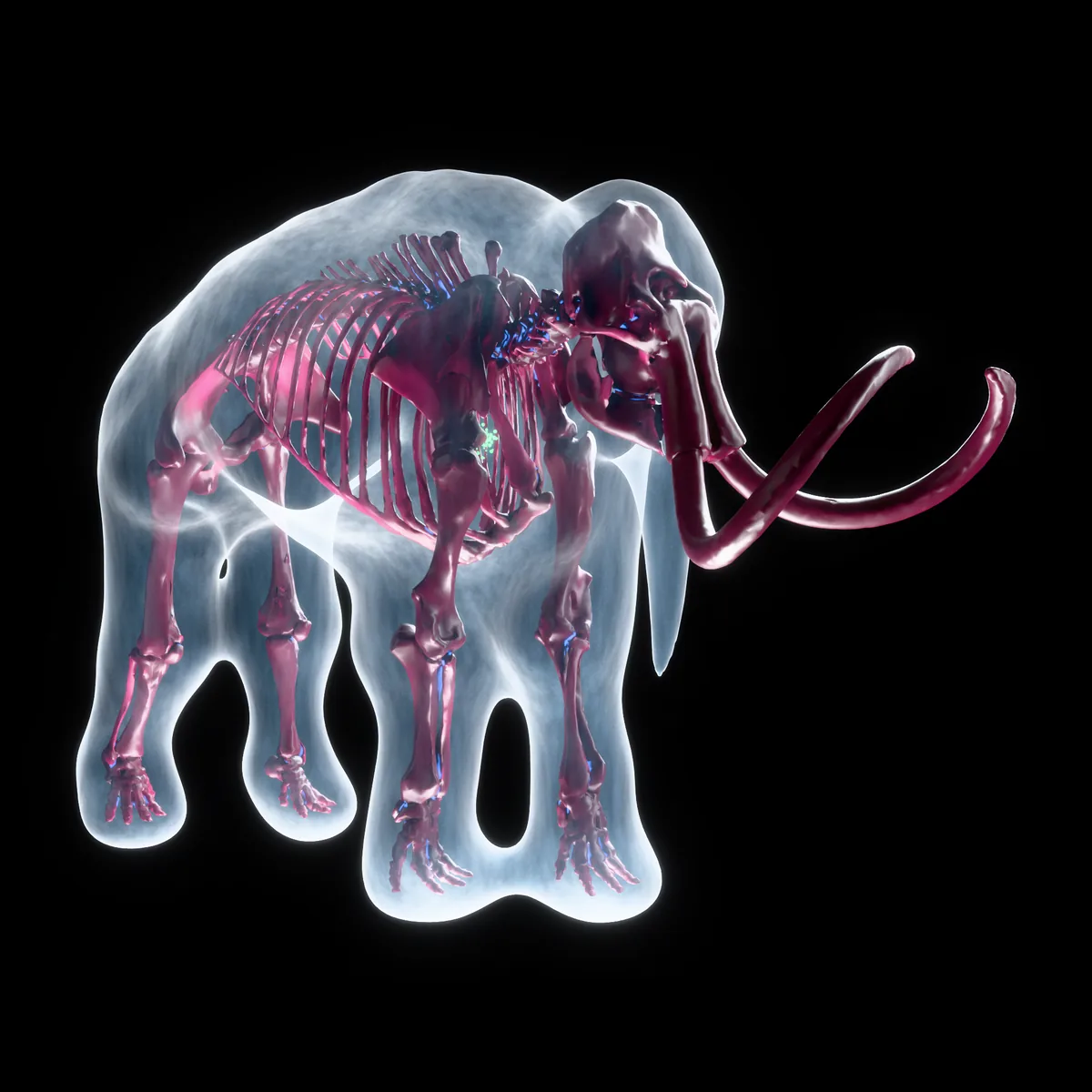
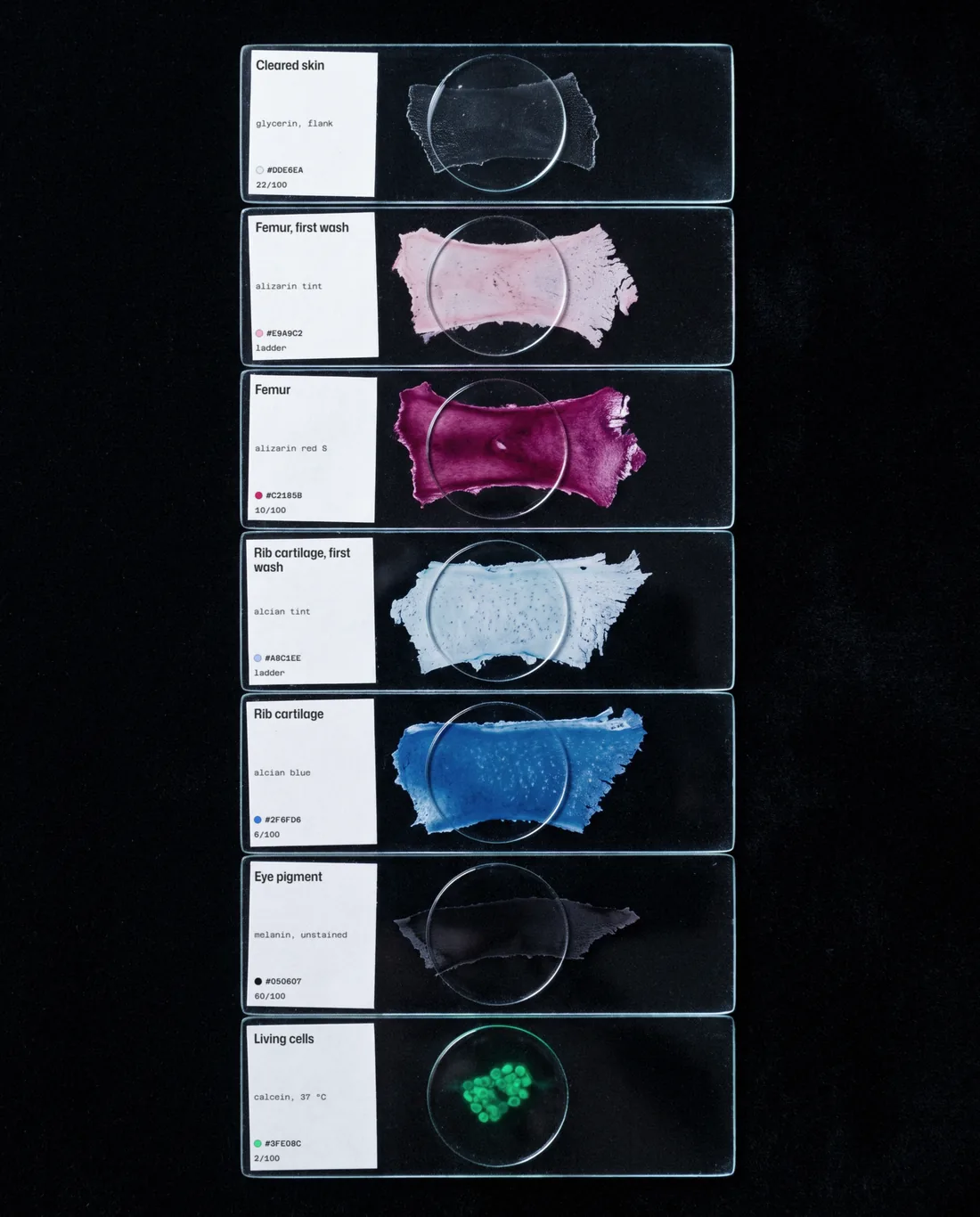
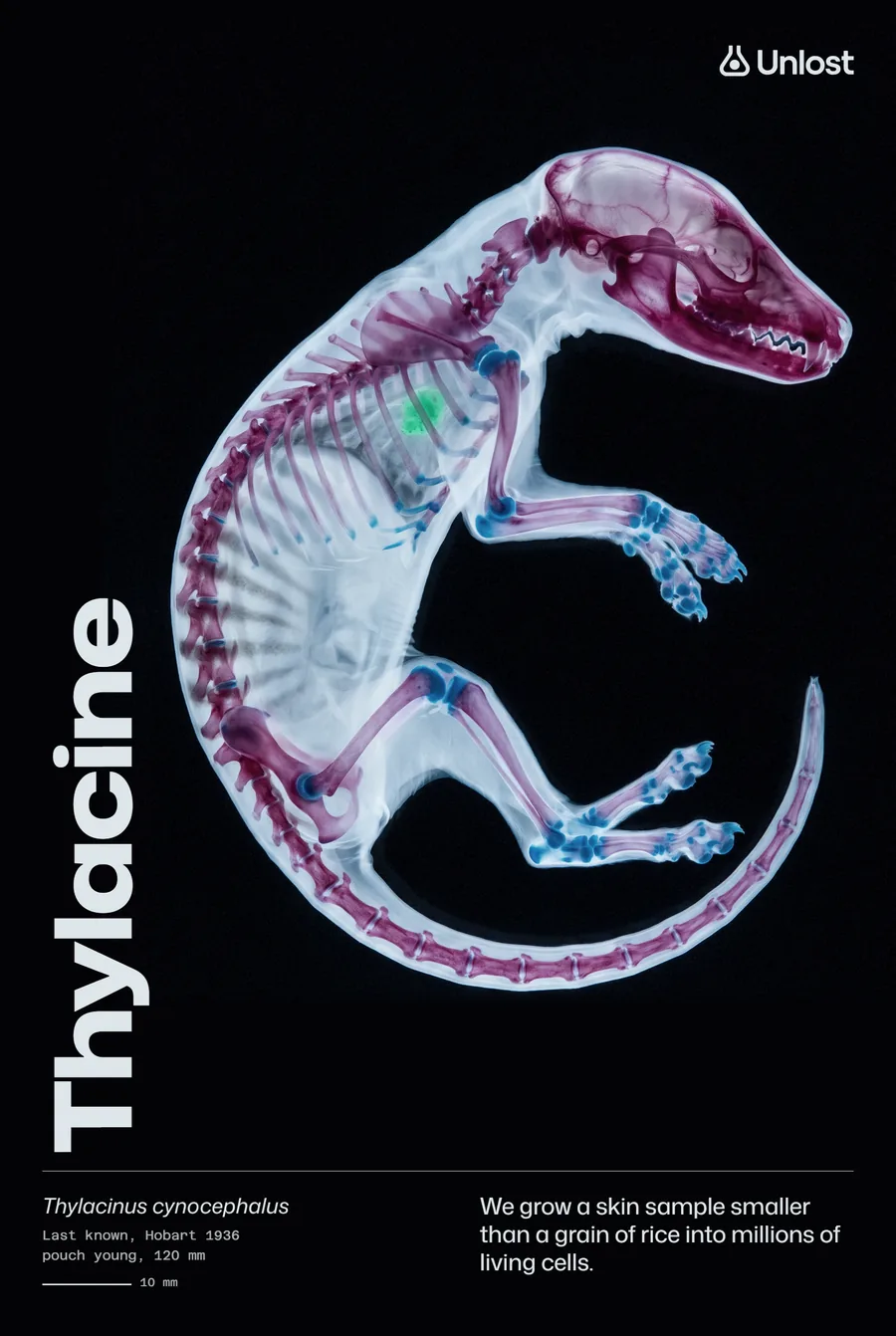
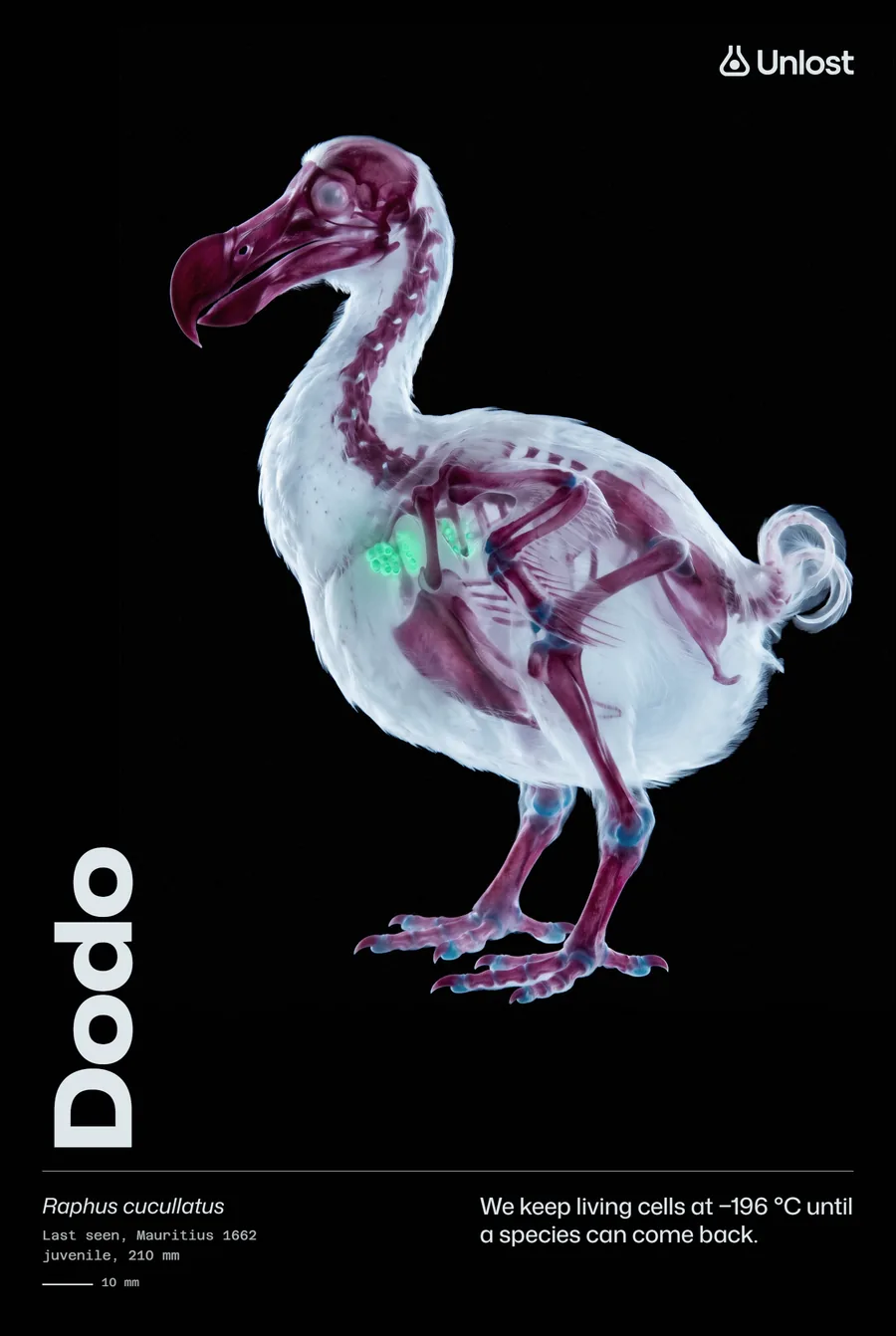
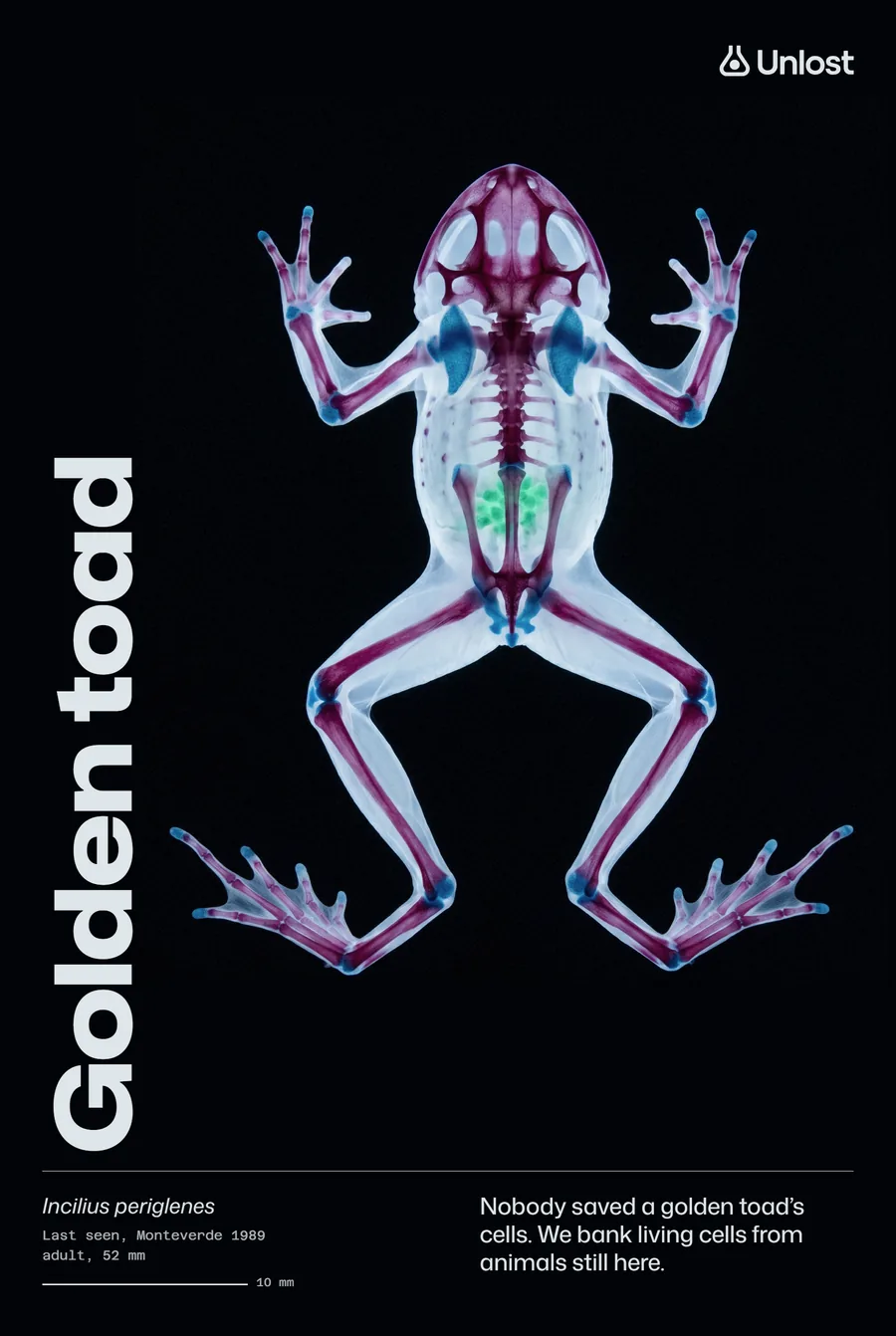
Every animal is shown the way a cleared-and-stained specimen is: clear tissue, magenta bone, blue cartilage, on black. Built in Blender on real museum scans and CT.
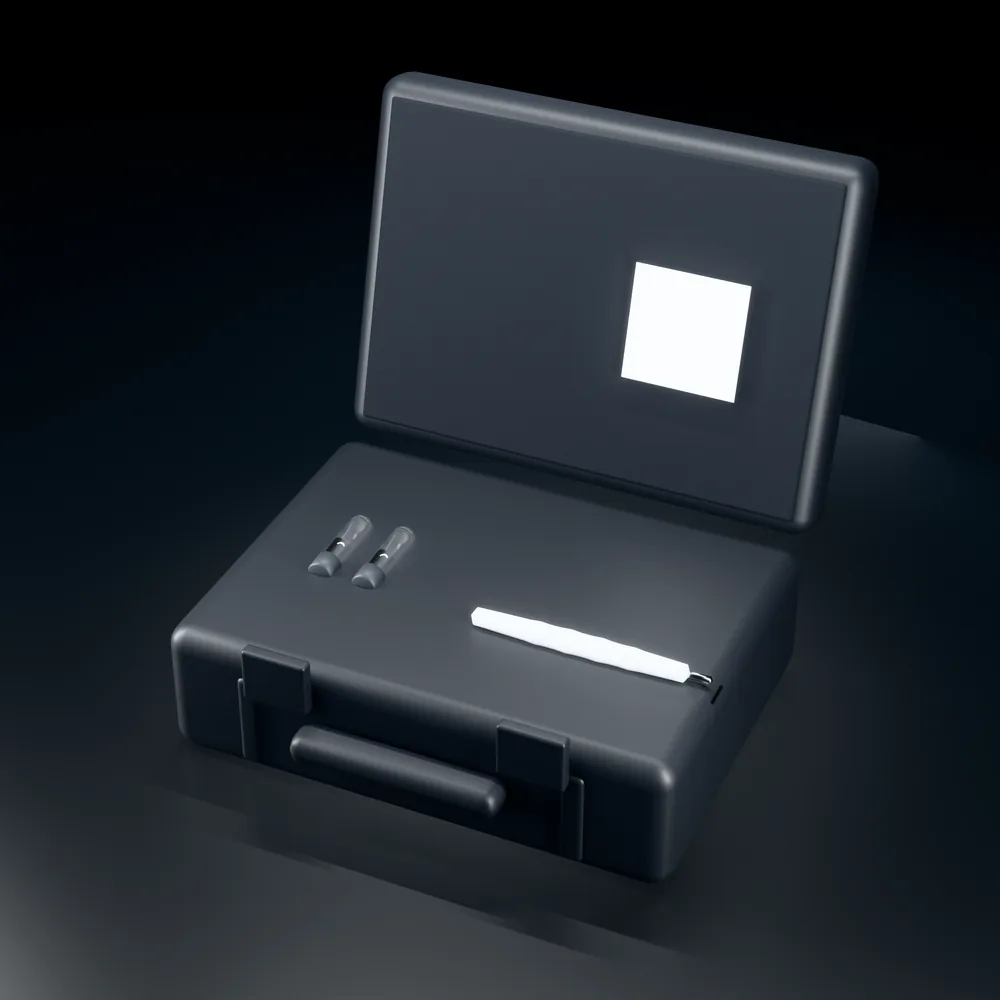
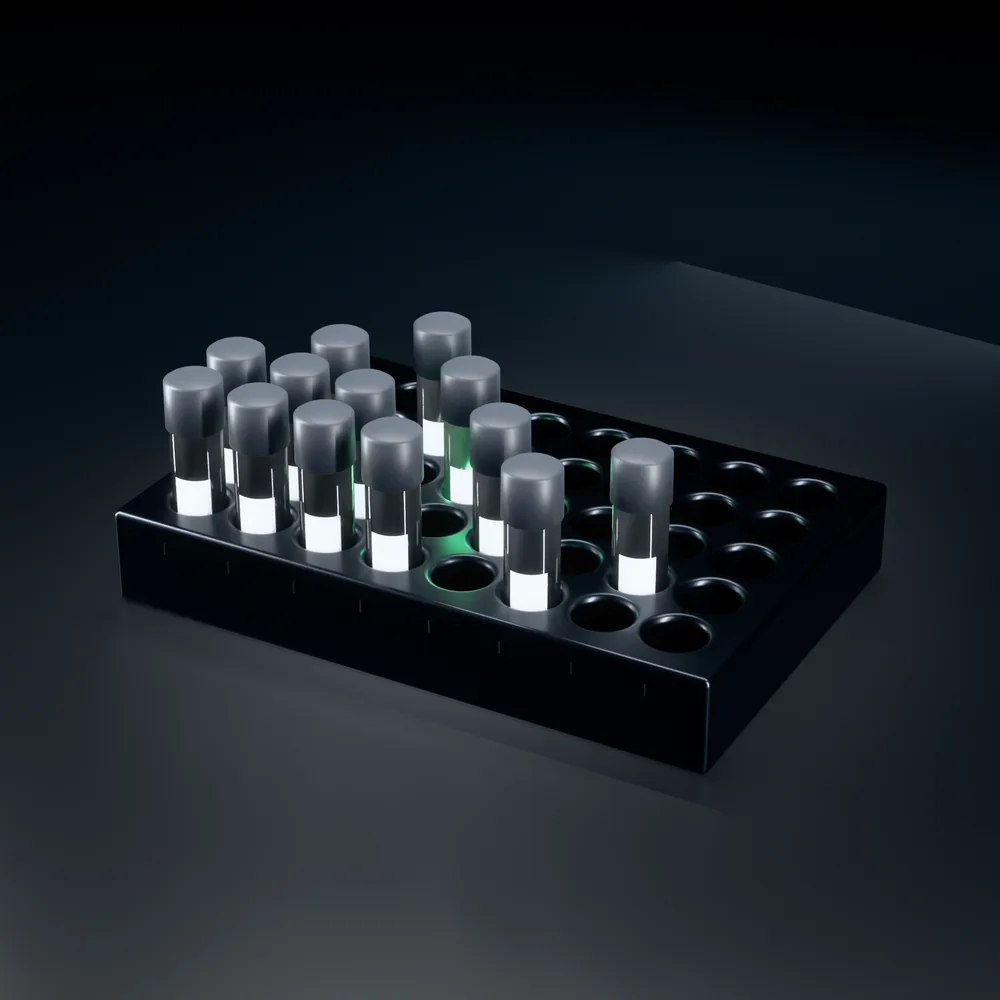
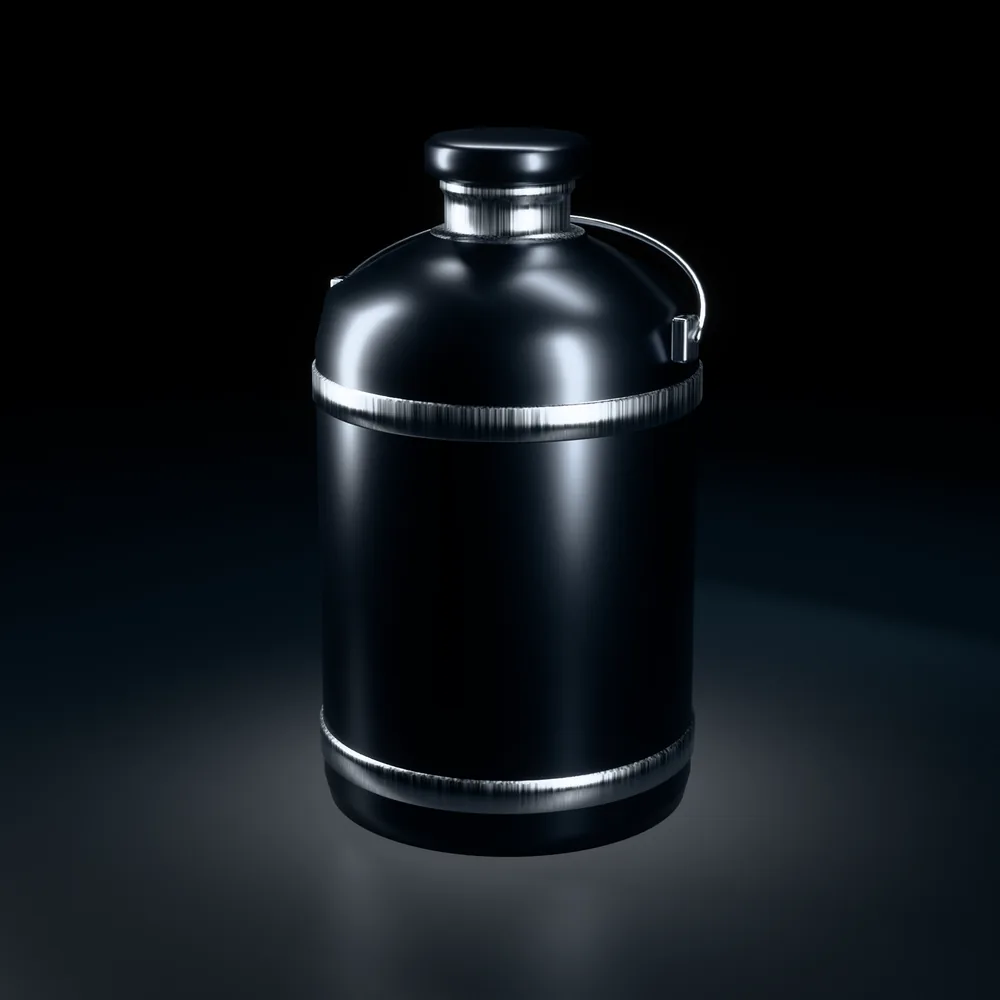
Specimen black
The ground of every screen and print, about 60 %
- Specimen black1.0:1
- Glass16.0:1
- Bone3.5:1
- Cartilage4.2:1
- Alive11.8:1
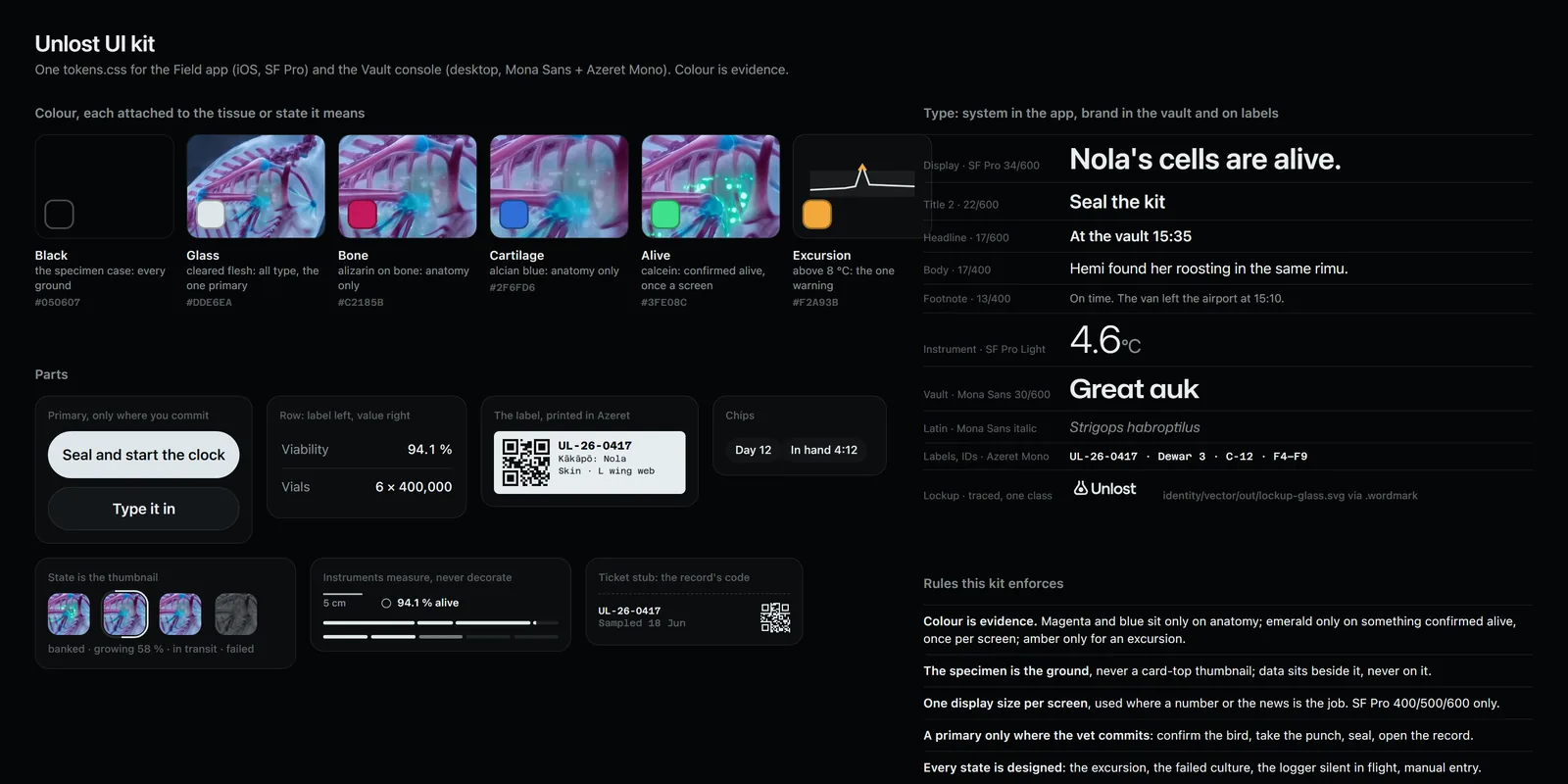
Colour is evidence: each one is a stain, and each stain has one job. Pick a slide or a colour to see the others on it; each pick copies its hex.
Every colour is a real stain
In a cleared-and-stained specimen, potassium hydroxide clears the soft tissue, alizarin red binds the calcium in bone and alcian blue stains cartilage; the specimen is kept in glycerol (Rigueur and Lyons, 2014).
The emerald is calcein: living cells turn it into a green fluorescent dye, and dead ones cannot (Thermo Fisher, LIVE/DEAD kit). So on Unlost, green only ever means alive.
Posters, a lightbox and the field vest
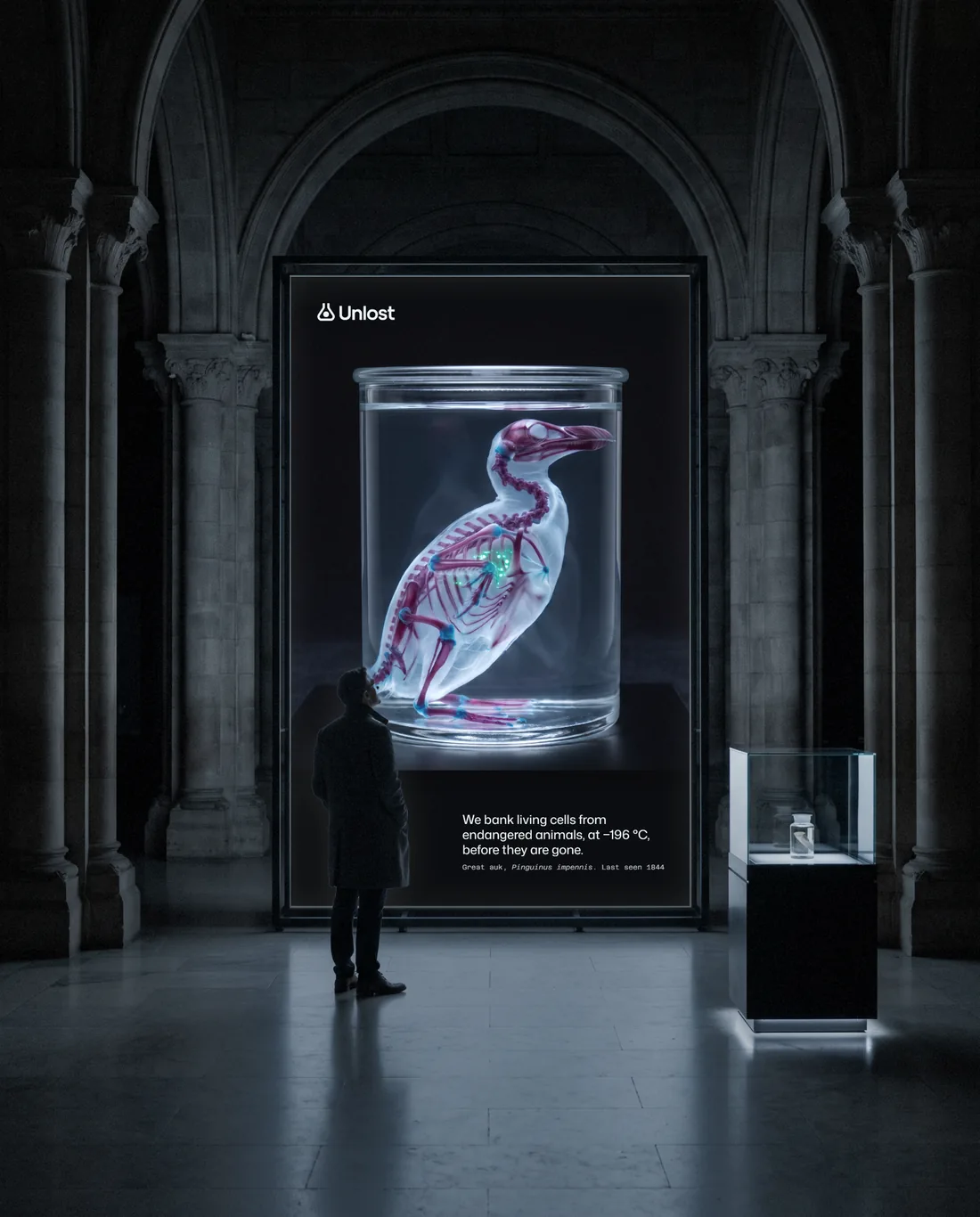
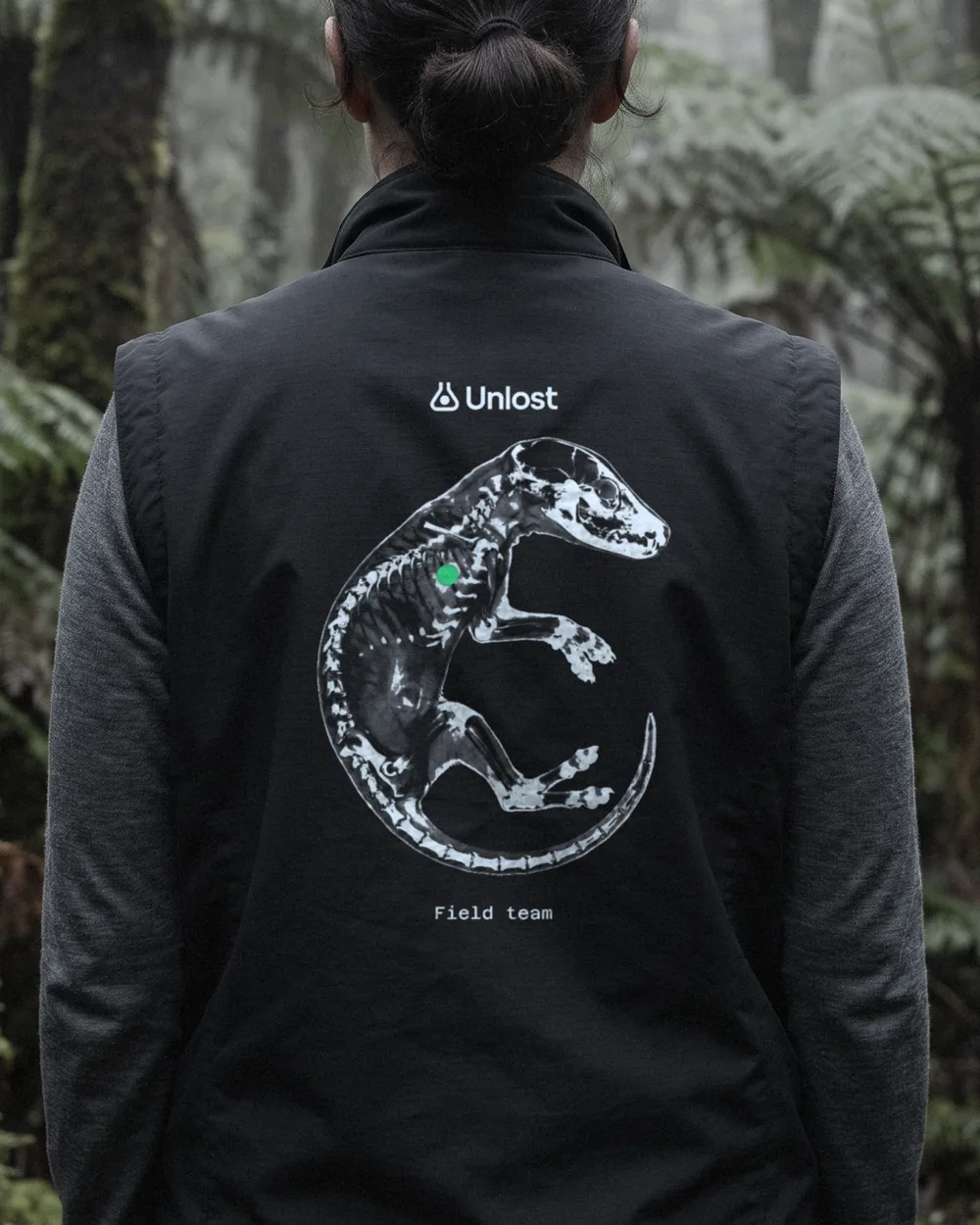
One lost animal to a poster, the cleared auk in a museum hall at night, and the specimen in glass ink across the field team's backs.
From museum scans to live screens
The bodies are real scans and CT, the clearing is a Blender material, the motion is Rive, and every screen is live HTML on one token file.
The pipeline
- 1 · Real bodies
- A photogrammetry scan of the great auk mount (280,000 triangles), a micro-CT of a thylacine pouch young (1,364 slices at 0.197 mm), and museum skeleton scans of a dodo and a mammoth. Every licence checked at its source.
- 2 · Cleared in Blender
- Tissue is a thin shell whose opacity follows the path length through it, so it is clear face-on and milky at the edge. Bone takes alizarin by its measured thickness; cartilage takes alcian blue at the joints.
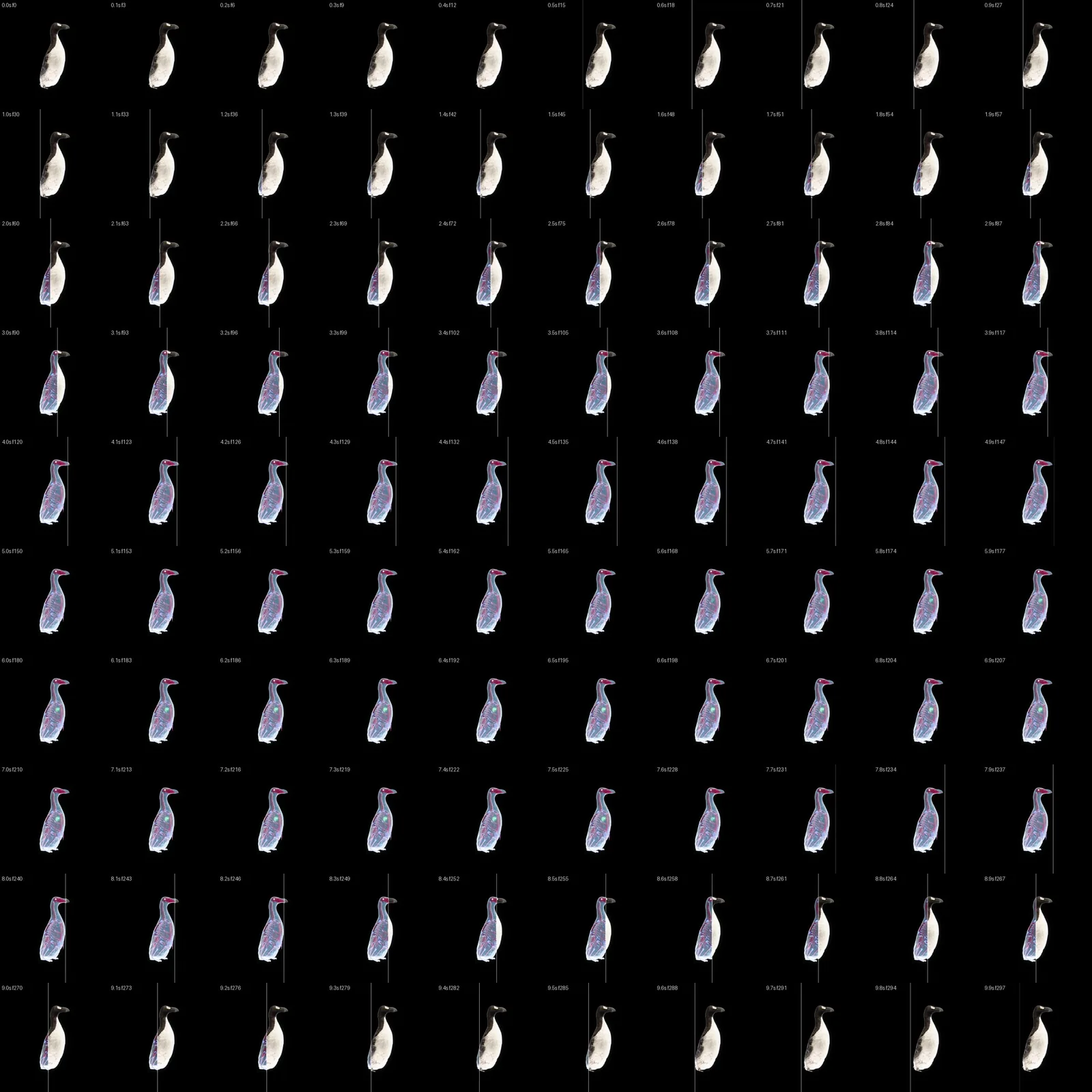
- 3 · The clearing sweep
- A hairline plane steps across the bird ten times. Behind it the feathers dissolve and the stained skeleton appears; then the cells light, one by one. 300 frames, seamless.
- 4 · Rive
- The mark is the traced vector, animated as is: the drop, the bloom, the ignition and one heartbeat, in one file of artboards with no state machine.
- 5 · Live HTML
- Field and Vault are HTML screens on one tokens.css, rendered with Playwright, so the film, the board and this page all show the real screens.
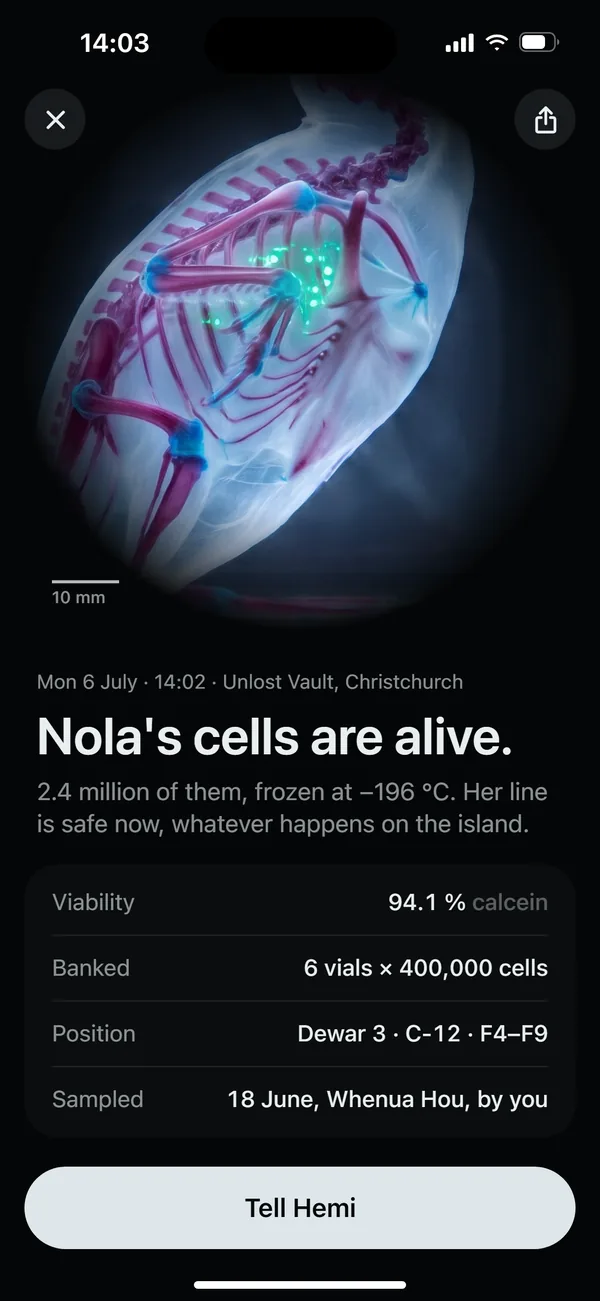
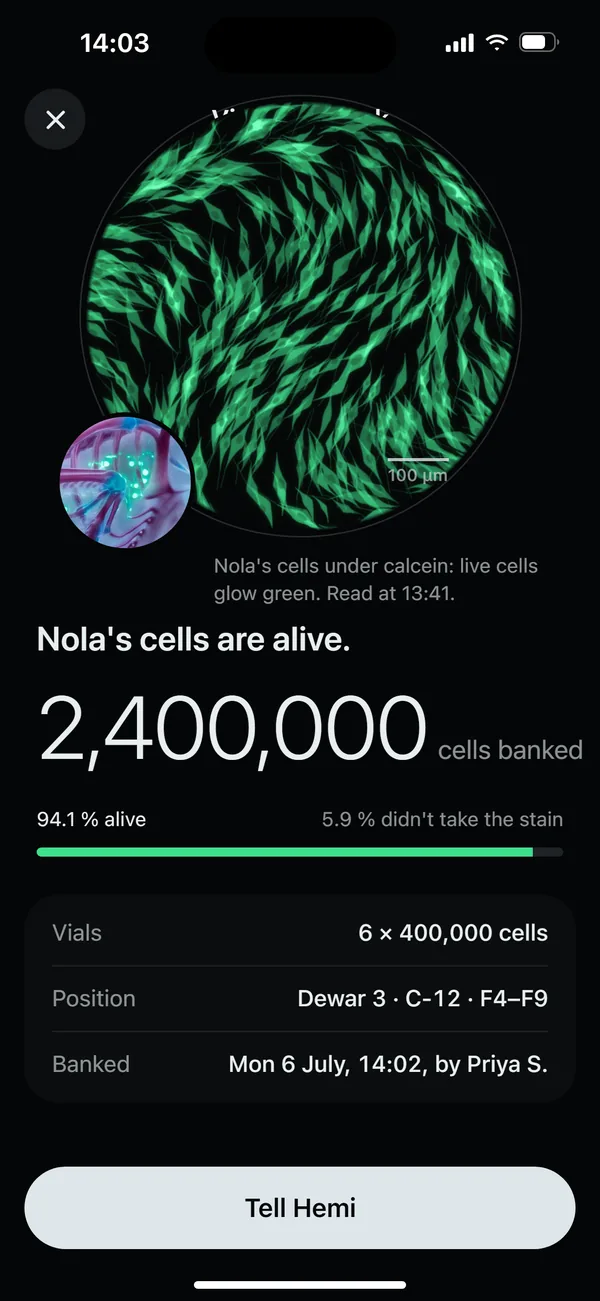
Three directions for one screen
The moment the cells are alive was drawn three ways: the specimen as the ground, the stain as the hero, and the result as a card to keep. The shipped screen, at the end of the prototype above, takes the ground from the first, the evidence from the second and the label from the third.
The identity board, as a 10-second film
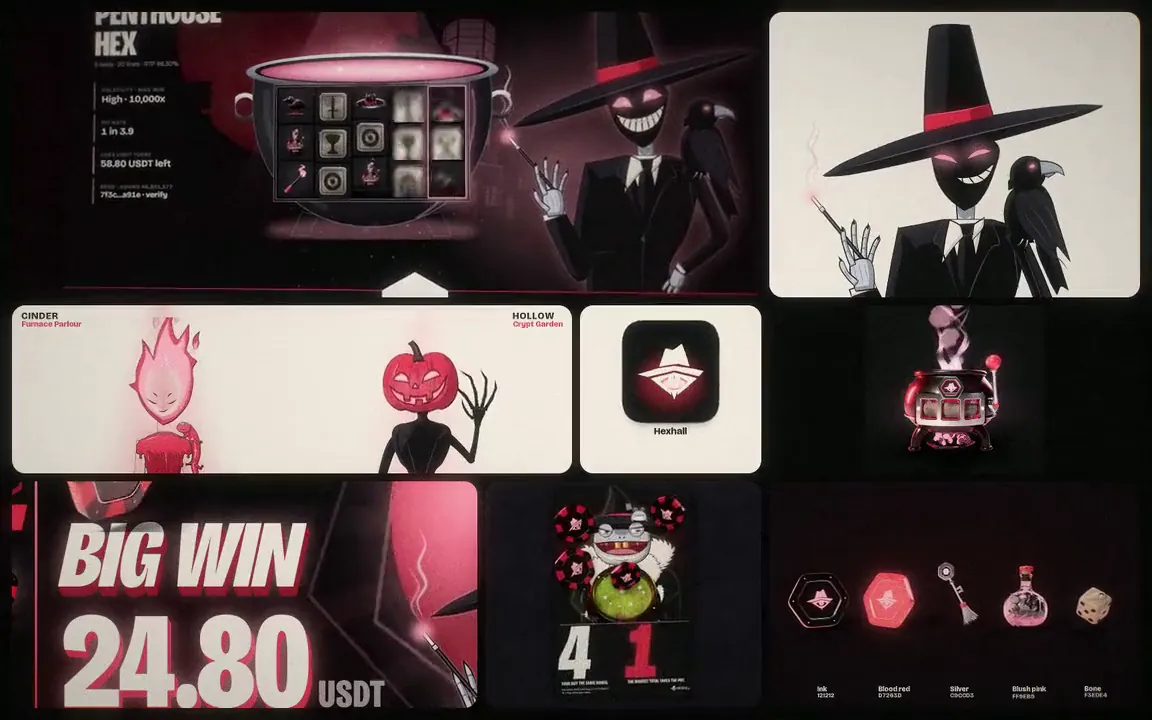
The field kit, the sweep, the register, the culture, the logo, the vest and the slides, each cell its own medium.
One emerald moment at a time, and it loops for LinkedIn and X. Great auk: Icelandic Institute of Natural History, model by Nils Gies, CC BY 4.0.
Specimen data and credits
The specimens are real, and their scans are shared under open licences. Here is who made them.
Credits
Great auk, mounted specimen (Pinguinus impennis): Náttúrufræðistofnun Íslands, the Icelandic Institute of Natural History; 3D model by Nils Gies. CC BY 4.0. Source. Cleared, re-coloured and animated by Alterra Studio.
Dodo skeleton (Raphus cucullatus), Muséum national d'Histoire naturelle, Paris: Micro-Folie. CC BY 4.0. Source. The body around it is sculpted by Alterra Studio.
Thylacine pouch young AMS P762, 12 weeks (Thylacinus cynocephalus), micro-CT: Newton et al. 2018, Royal Society Open Science. CC0. Zenodo 5031261.
Woolly mammoth skeleton (Mammuthus primigenius): Smithsonian National Museum of Natural History. CC0. Smithsonian 3D. The body around it is sculpted by Alterra Studio.
The category audit
We scored 10 funded conservation-genomics, biobanking and revival companies on our startup homepage benchmark. None shows that a stored cell is alive.
Each homepage was scored on 12 criteria, 0 to 2 each, at 1440 and 390 pixels wide. The group averages 13.0 out of 24, below the 14.1 of our wider benchmark, and 7 of 10 open on a mood photo or video.
None shows where a sample came from on the first screen, none says what it does in five seconds at both widths, and only one shows its product working up top. Unlost's key screen is built for the first two: a named animal's sample, and her cells shown alive.
- Company A19
- Company B19
- Company C18
- Company D16
- Company E14
- Company F10
- Company G10
- Company H9
- Company I8
- Company J7
- Benchmark average, 100 startups14.1
Alterra Studio startup website benchmark 2026. Companies are anonymised.
What we'd ship
For a real science company, this is Brand + Product design.
- Brand
- The name, the world, the mark and its motion, the palette as stains, type and the voice
- Product
- Field for the vet and Vault for the lab, every edge state included, on one token file
- 3D and motion
- Specimens built in Blender on real scans, the clearing sweep, product renders and the Rive mark
- Launch
- The product film, the board, posters, a museum lightbox, the field kit and the X profile
What's next
- Test Field with vets in the field on gloves, in rain and on a sunny cliff, before the first season.
- Build the public Atlas every banked species, free to explore, each with its revival status.
The thinking behind it.
Guides on the decisions behind work like this, written by the team that did it.
All insights- Product8 min read
Does a startup need a design system? Cost, timing, what to build
When a startup needs a design system, what it costs in people and upkeep, what to build first (tokens, core components, states) and whether to adopt, adapt or build your own.
- Product8 min read
How much does product design cost for a SaaS startup?
What SaaS product design costs in 2026: Clutch, Upwork, BLS and Levels.fyi data on agencies, freelancers, retainers and in-house designers, what drives the price, a worked example and red flags.
- Brand5 min read
How we turned our logo into a type family
We measured the Alterra wordmark, traced its five letters, and grew it into three display weights and a text companion. The grid, the rules and what we'd do differently.
Want this for your company?
Book 30 minutes. We'll tell you what we'd change first in your brand and on your first screen, and what it would cost.
Book a call, get a price rangeCurious how your site compares?  Run the same audit on your site →
The brand in the feed
A mockup of how the brand would run on X. Not a live account.
Unlost
@unlost
We bank living cells from endangered animals before they are gone. Field to vault, −196 °C. Nothing alive is lost for good.
unlost.bioJoined October 2026
61 Following2,418 Followers
Pinned
Unlost @unlost · Oct 23
Meet Unlost. We keep living cells from animals still here, so they are never only a record.
189274036K
Unlost @unlost · Oct 24
A 3 mm skin punch, a sealed kit, a logger the whole way. This is Field.
94138019K
Unlost @unlost · Oct 25
Lost in 1662, 1936, 1989. Three posters for the museum shop.
63331012K