Our own history brand, from first commit to a live 50-product shop in three days
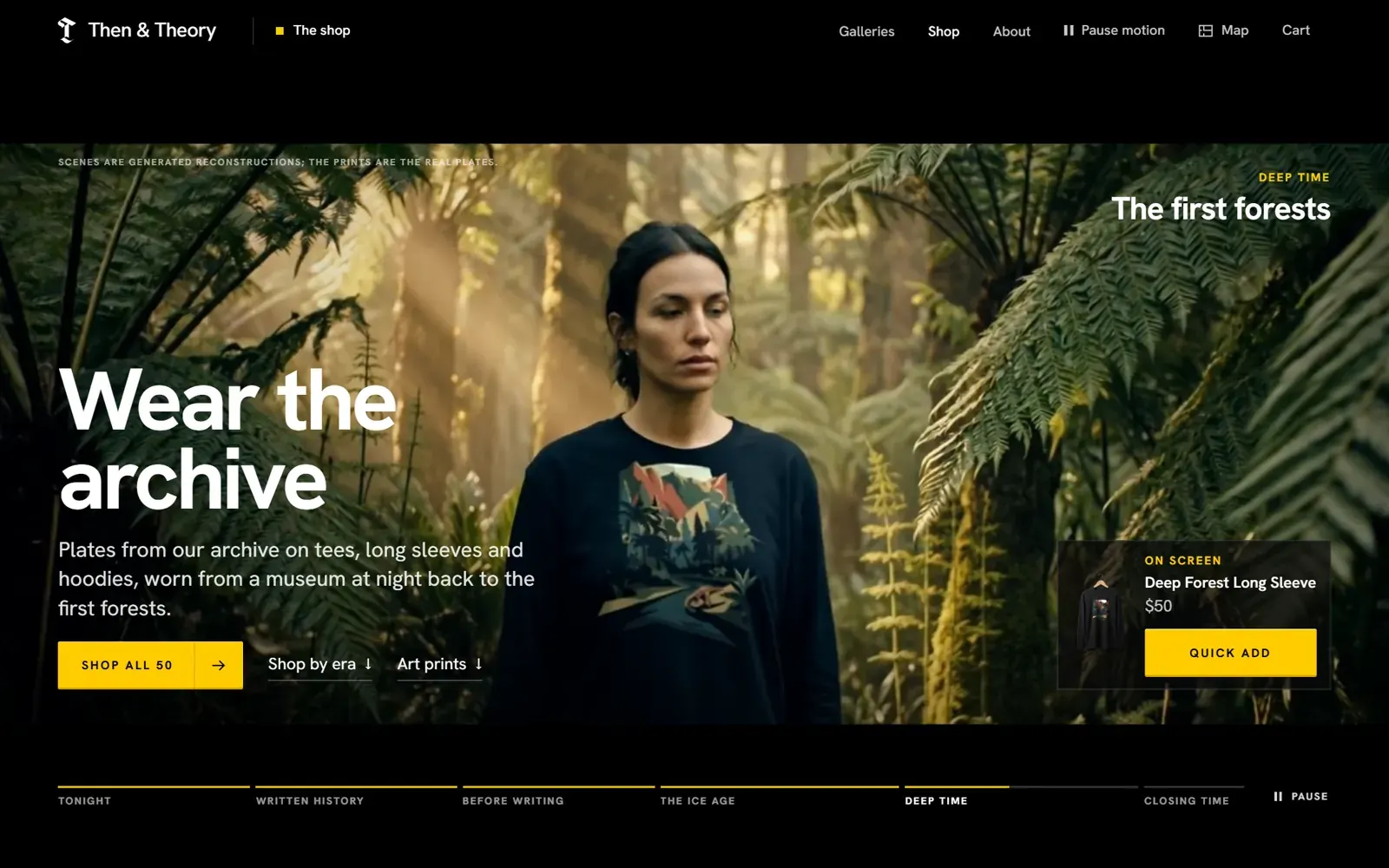
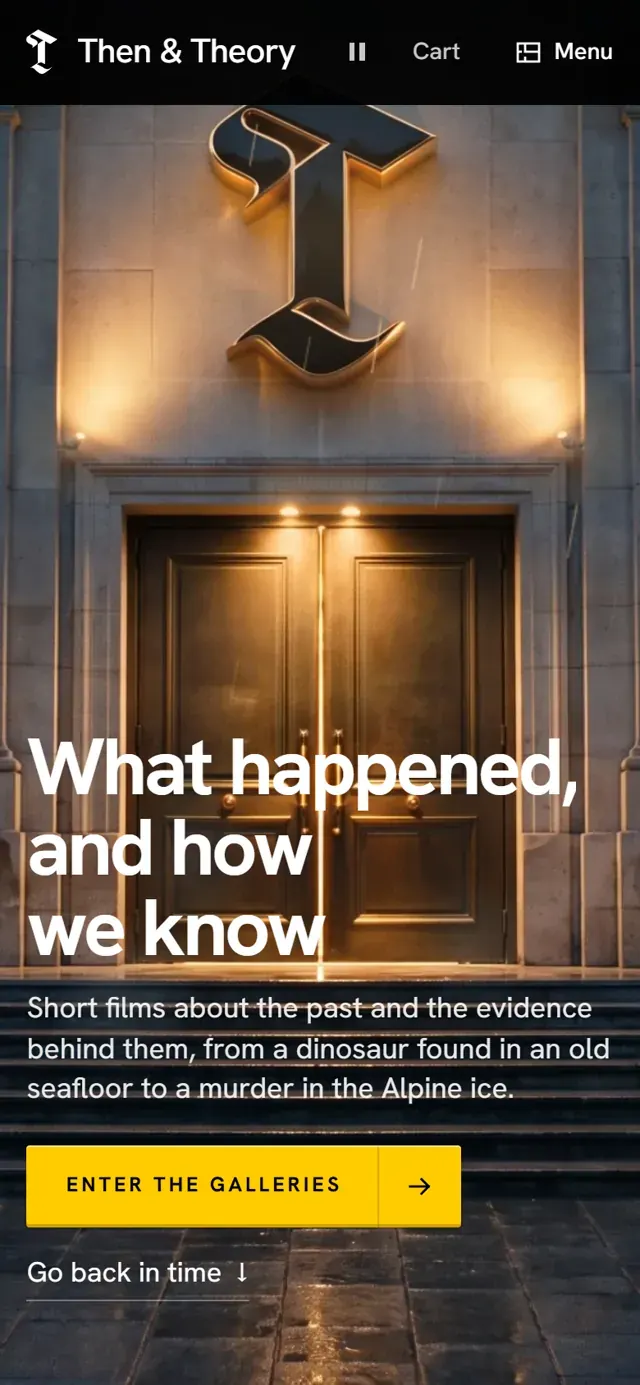
Book a call, get a price rangeThen & Theory is Alterra Editions' history brand: short films about what happened, and how we know. It's our own venture, not client work. We designed and built its website and shop, and we make its 3D history reels.
The films needed a home and shop people would want to visit, that still runs smoothly on an ordinary laptop.
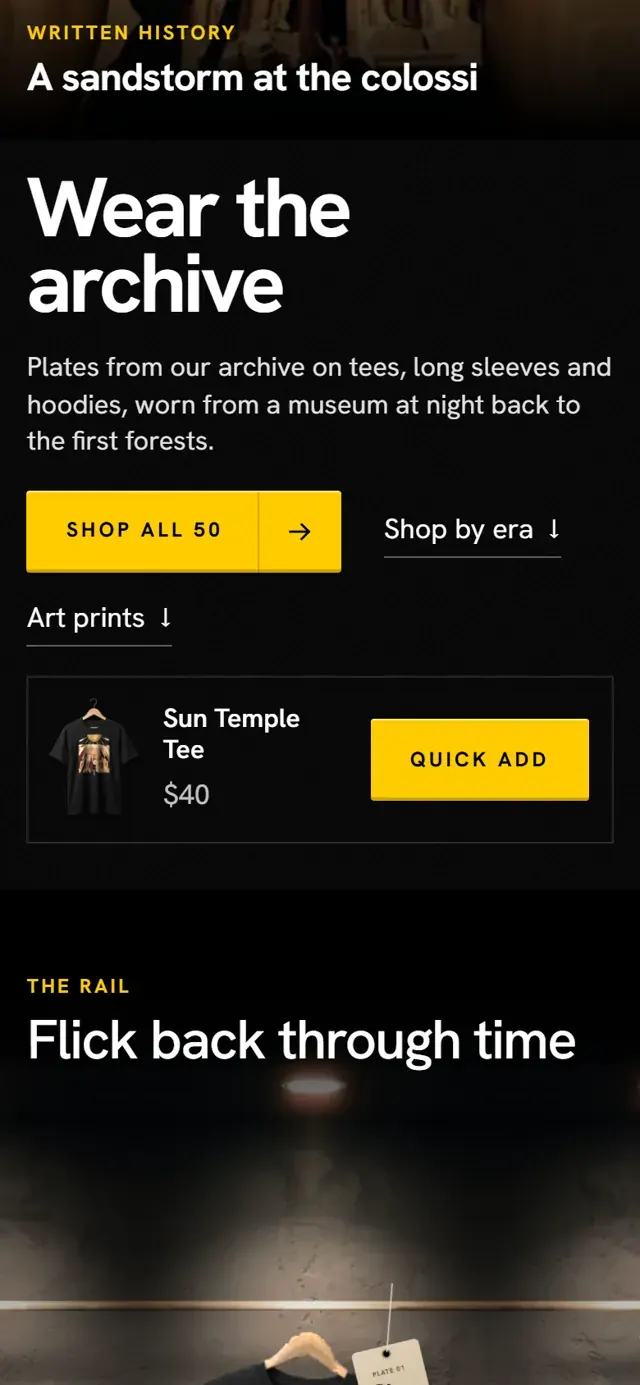
An Astro site and shop with a three.js garment rail, Rive plates, Fourthwall checkout and a Blender reel pipeline.
A live 50-product shopFirst commit to live in 3 days
- Client
- Then & Theory, an Alterra Editions brand
- Stage
- Venture / in-house
- Services
- Website, shop, 3D history reels
- Timeline
- First commit September 28, 2026, live September 30, 2026
- Tools
- Astro, three.js, Rive, Blender, Fourthwall, Cloudflare
- Website
- Visit thenandtheory.com
The problem and the brief
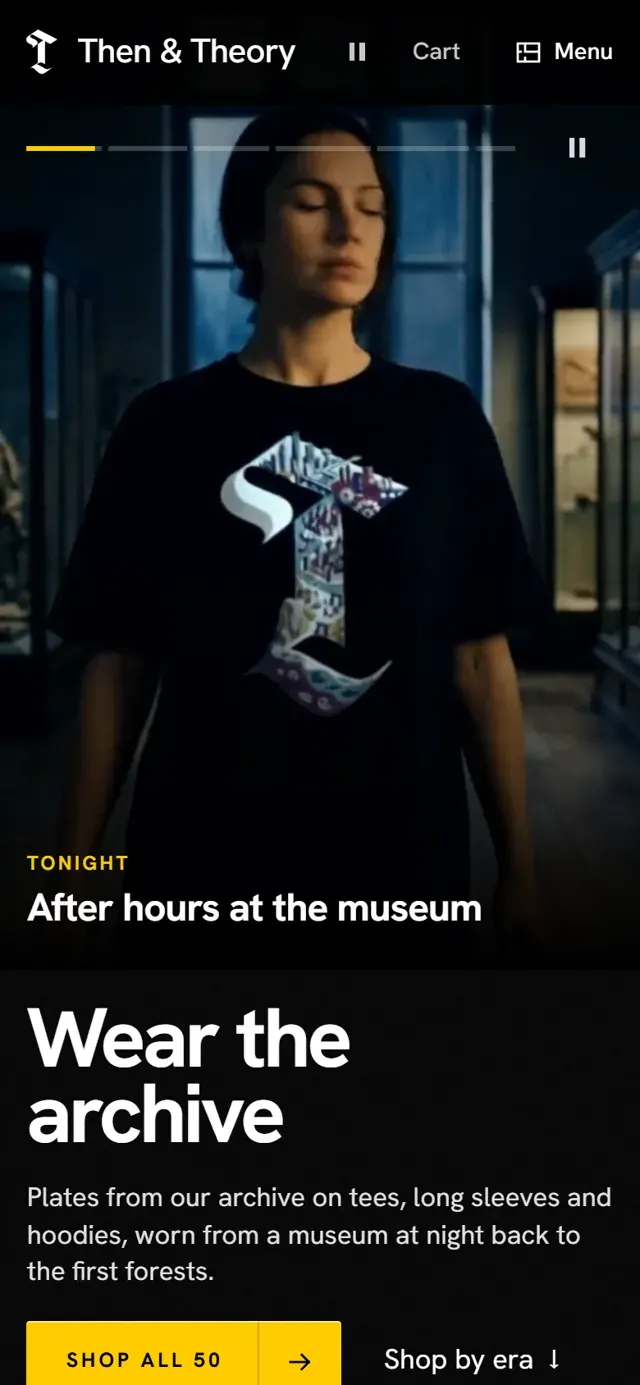
Our own history brand needed a home for its films, and a shop that feels like a museum after hours, not a merch page.
Then & Theory is Alterra Editions' history brand: short films about what happened, and how we know. It's our own venture, not client work, which is why this page can show every wrong turn.
The site had to carry the brand's promise, the history is right and you can see how we know, sell 50 products through a print-on-demand partner, and still run smoothly on an ordinary laptop.
The research
of YouTube users say they at least sometimes see videos that seem obviously false or untrue.
Source: Pew Research Center, 2018
What history viewers and museum-shop buyers write
We gathered 449 comments from Hacker News and a Reddit archive about history content, clickbait, accuracy and museum merchandise. Jev judged each one: is it about watching or buying history, which need does it express, and who is speaking? We ran this in October 2026, just after the site launched.
- 449comments read
- 188about watching or buying history
- 44from buyers
- Clickbait, sensationalism and AI slop72
- Accuracy and sources36
- Merch design: tasteful, museum-like30
- Buying to support a channel19
- Merch quality: print, fabric, paper16
- Storytelling that keeps you watching15
The threads were found by searching these topics, so the counts show what comes up most often. They are not a survey. Classified by Jev.
Three things a history fan asks
- Viewer
Is this slop, or is it true?
- Viewer
How do you know?
- Buyer
Is it tasteful, and is it any good?
The strategy: show how we know, sell like a museum
The brand line is the strategy: what happened, and how we know. The site marks how sure each claim is, shows the methods behind the dates, and sells the plates the way a museum shop would.
- Need 1 · True?
Is this slop, or is it true?
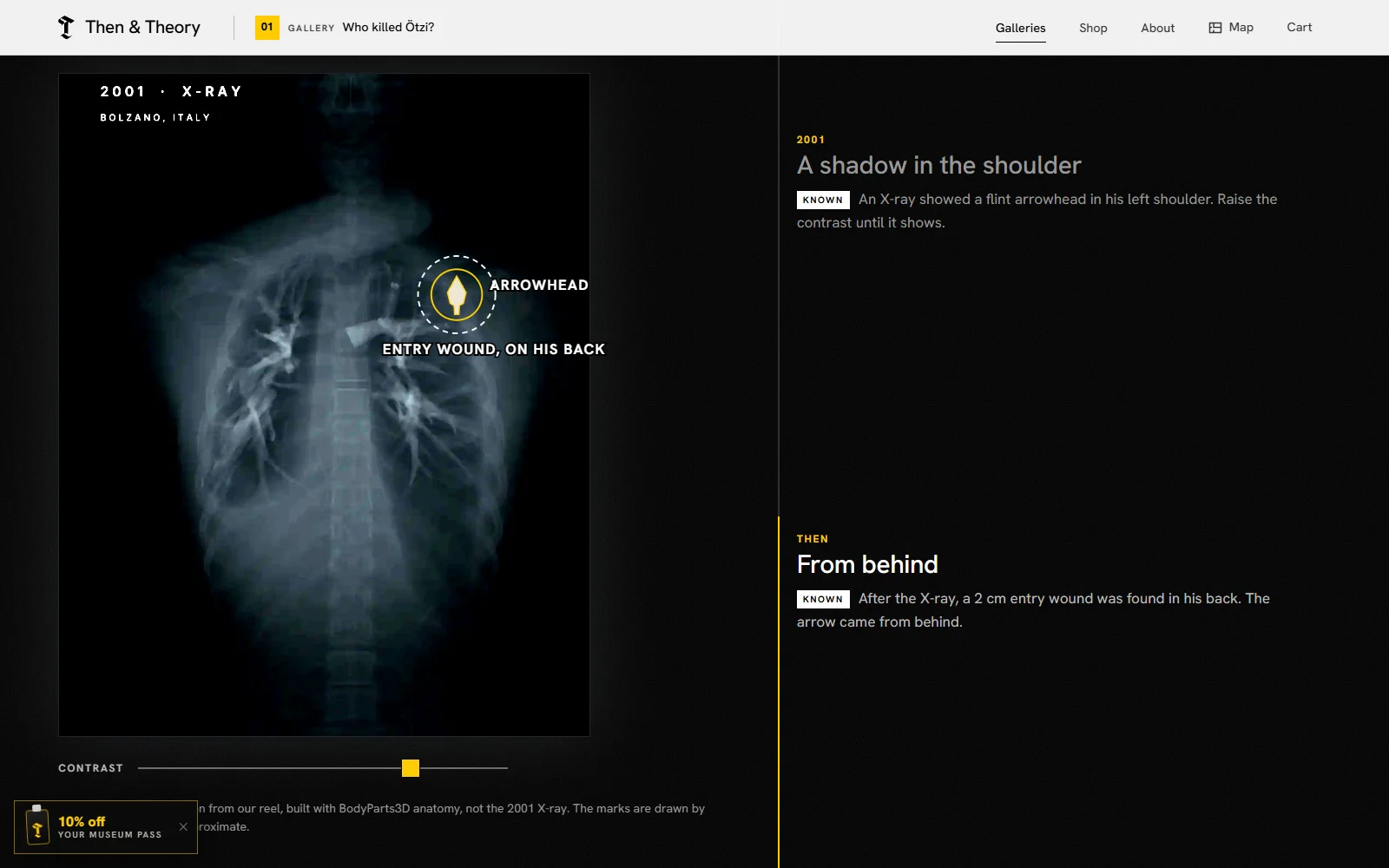
Every claim marked Known, Argued or Legend
Each story is a gallery: a real object on one side, the case told beside it, and every claim stamped with how sure we are. Reconstructions are labelled as reconstructions, never passed off as footage.
Clickbait and AI slop are the biggest complaint: 72 of 188 passages.
- Need 2 · How?
How do you know?
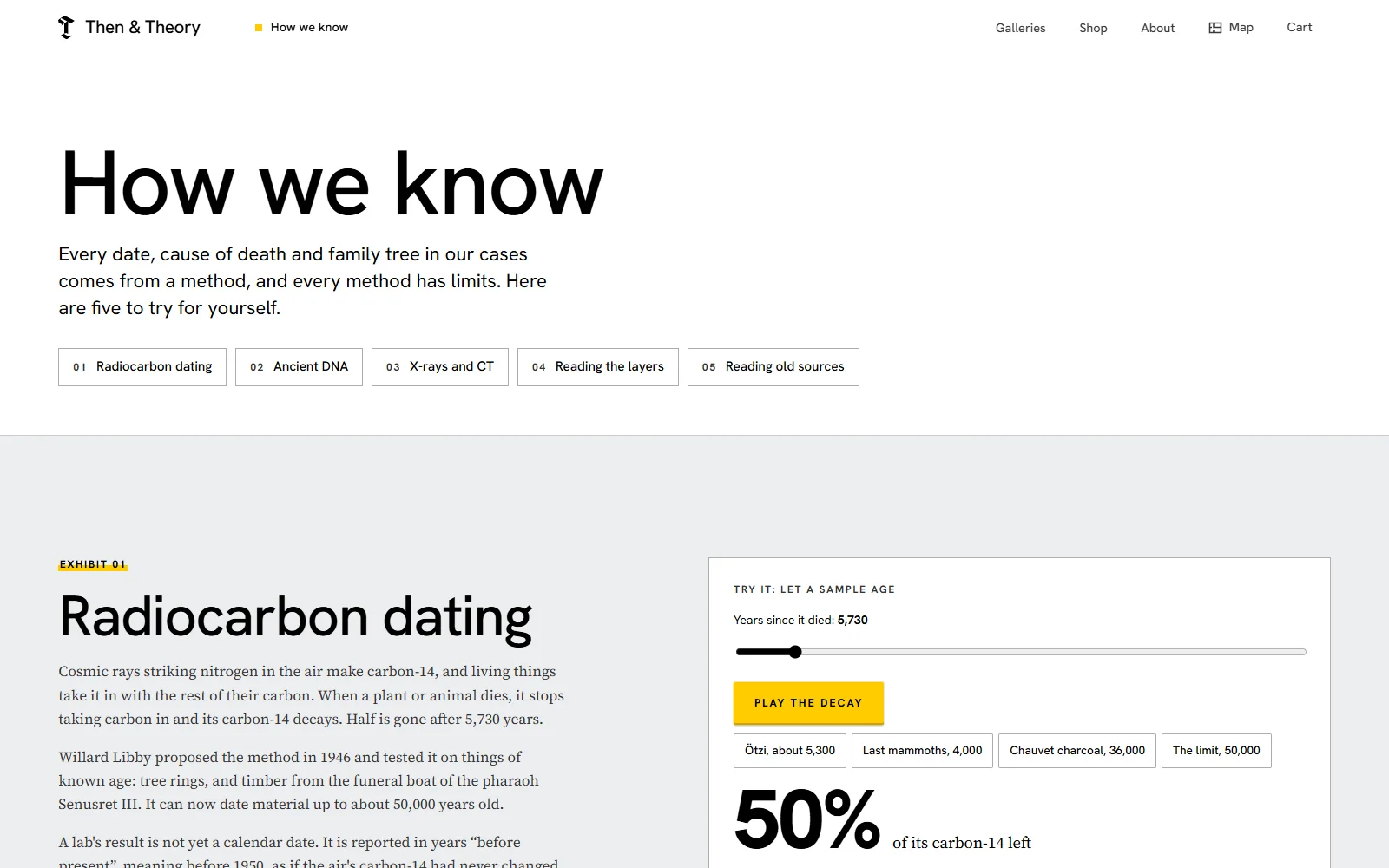
A page of methods you can try
How we know explains five methods, radiocarbon dating, ancient DNA, X-rays and CT, reading the layers and reading old sources, each with a hands-on demo, its limits, the galleries that use it and its sources. Notes cite museums and papers, never Wikipedia.
36 passages are about accuracy and sources, and 64% of YouTube users say they see videos that seem obviously false.
- Need 3 · Tasteful?
Is it tasteful, and is it any good?
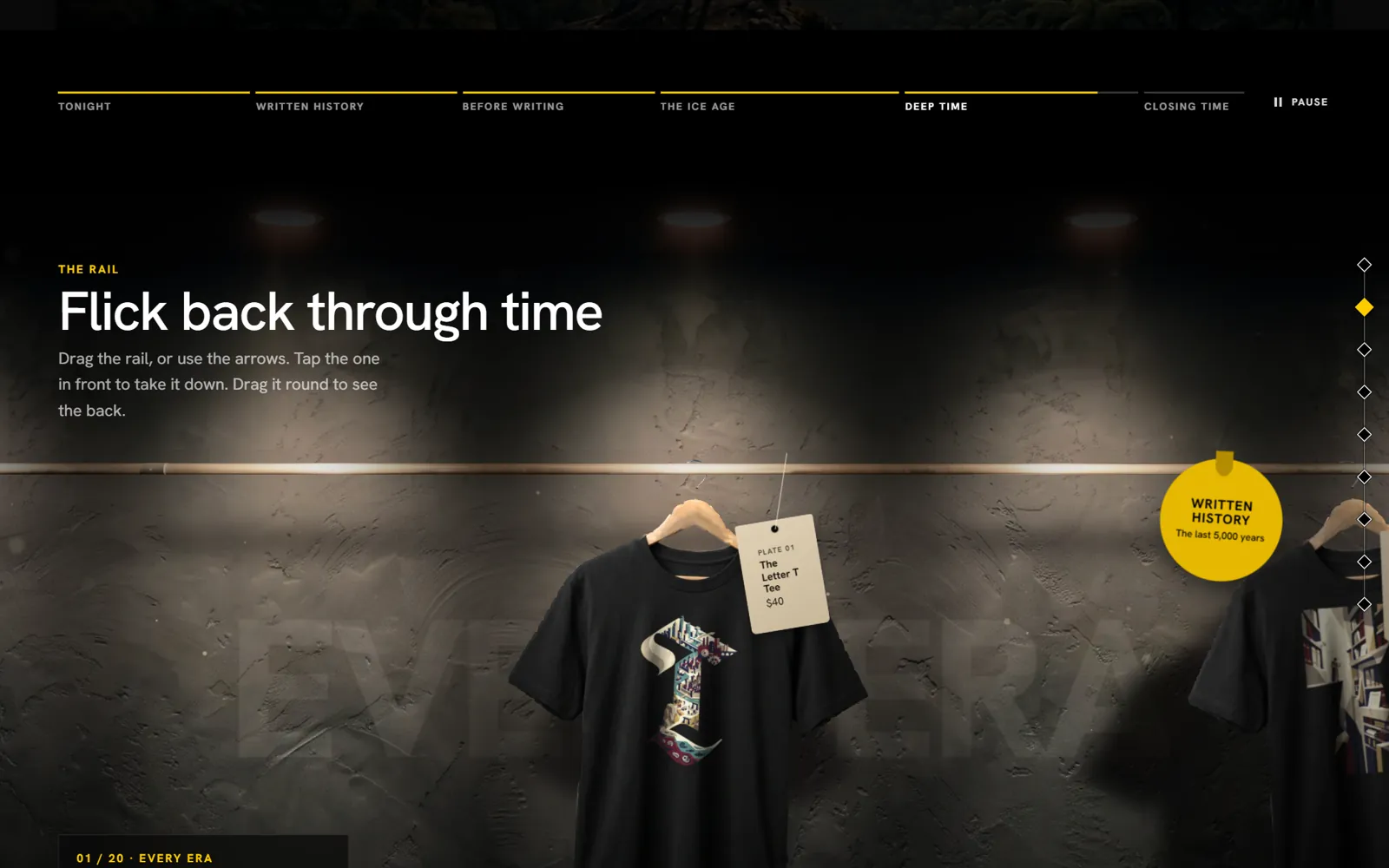
A rail you can take a garment from
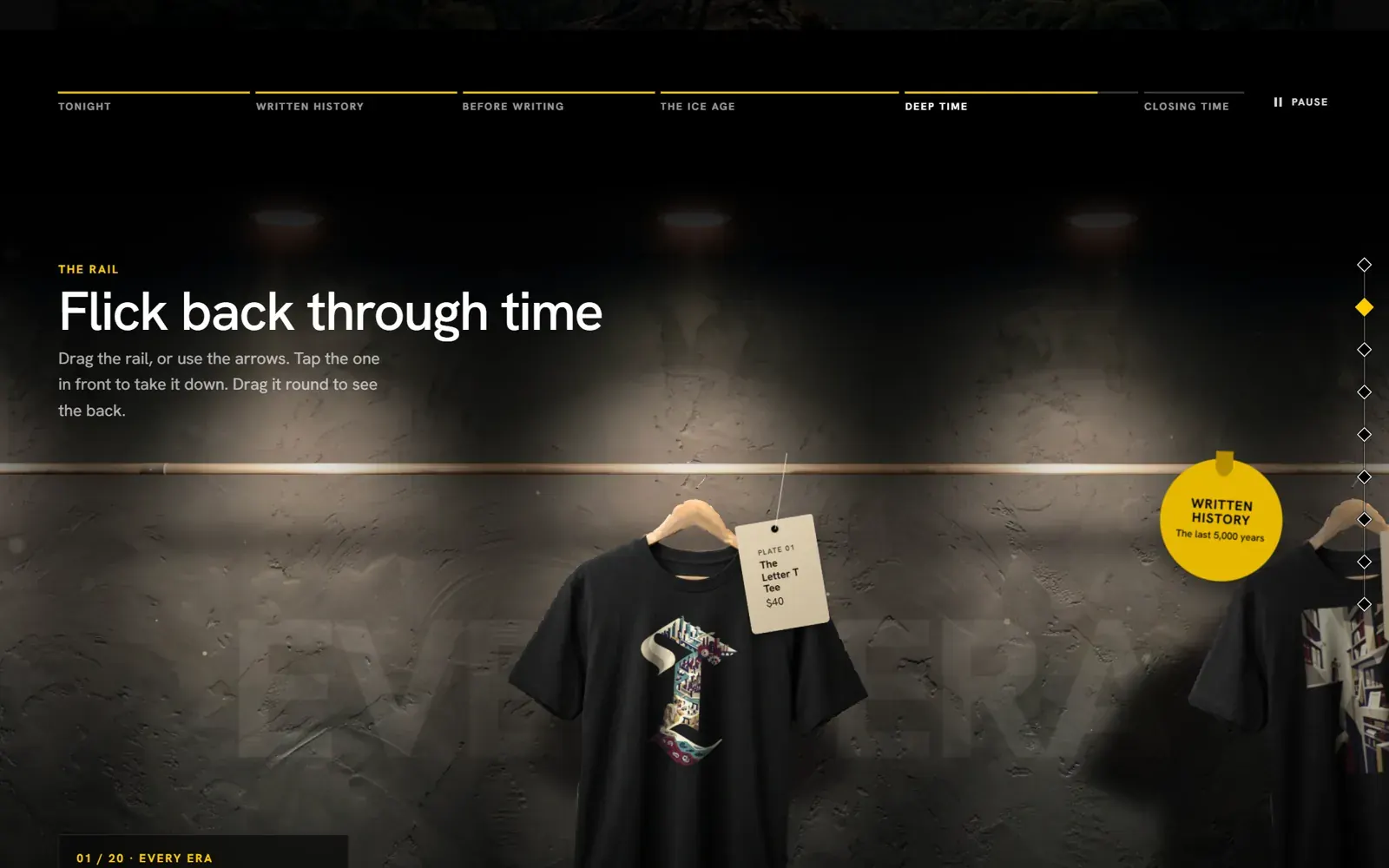
The shop's rail hangs the real product photos as cloth in 3D: drag the rail, take a garment down, turn it around. Each garment is an edition with a catalogue number, the blanks are named, and prints are called art prints and shown unframed on a gallery wall.
46 passages are about merch design and quality.
The design system
Set like National Geographic's site, role for role: black, white and one yellow, with all other colour coming from the films.
- Black #000000Galleries and night grounds
- White #FFFFFFReading pages
- Yellow #FFCC00A mark or a fill, never a frame
- Cool grey #EDEEF0Exhibit panels and the methods pages
Type. Hanken Grotesk for headlines, kickers and labels; Source Serif 4 for reading; the blackletter T as the only logo.
3D, where it counts. The rail is three.js: each garment photo hangs as cloth on a mesh inflated from the photo in Blender, so the photography stays the texture. The rest of the site stays light.
Speed. Tested on an integrated-graphics laptop stand-in, not only a fast PC; a full-page grain overlay was cut because it cost four seconds per scroll run.
Results
- Time to live
- Three days, from the first commit on 28 September 2026 to a live site on 30 September
- Shop
- 50 products at launch across tees, long sleeves, hoodies, art prints, mugs and stickers, through Fourthwall
- Method
- Five methods explained and demonstrated, and every claim in the galleries stamped Known, Argued or Legend
- Analytics
- A loop reads every reel on the channel three times a day. Across 38 reels, most made before our work on the account, the lower the skip rate, the more views (ρ = −0.82)
What's next
- One signature 2D style chosen by trial and error, hand-built rather than generated.
- Test the hooks a pinned question and a striking first frame, against the channel's own skip rates.
- Publish the shop's numbers once there are 90 days of them.
Want this level of craft on your brand? Talk to us about website design & development.
Curious how your site compares?  Run the same audit on your site →