
Texel: a brand for an API that turns a typed material into the four texture maps a game artist needs
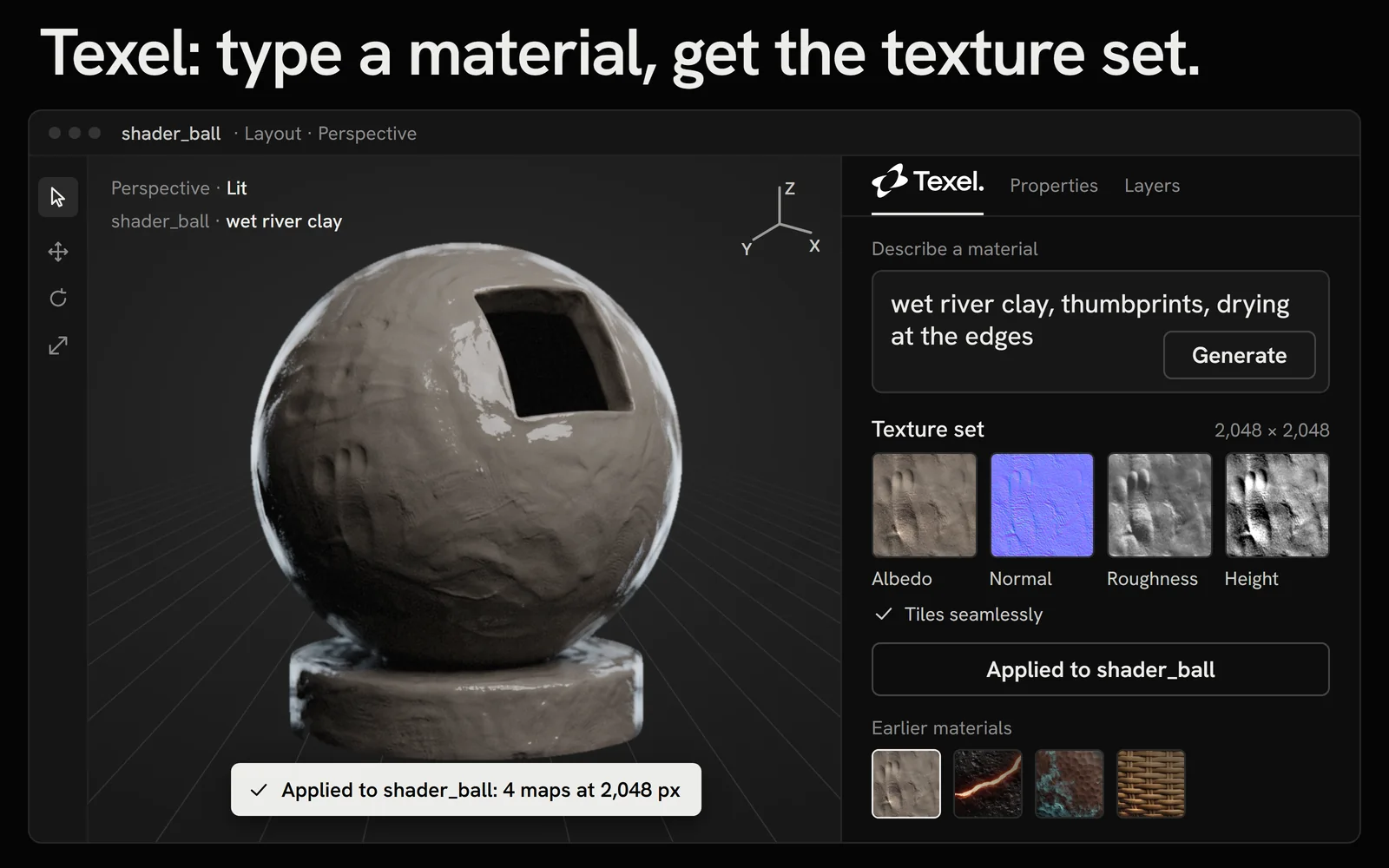
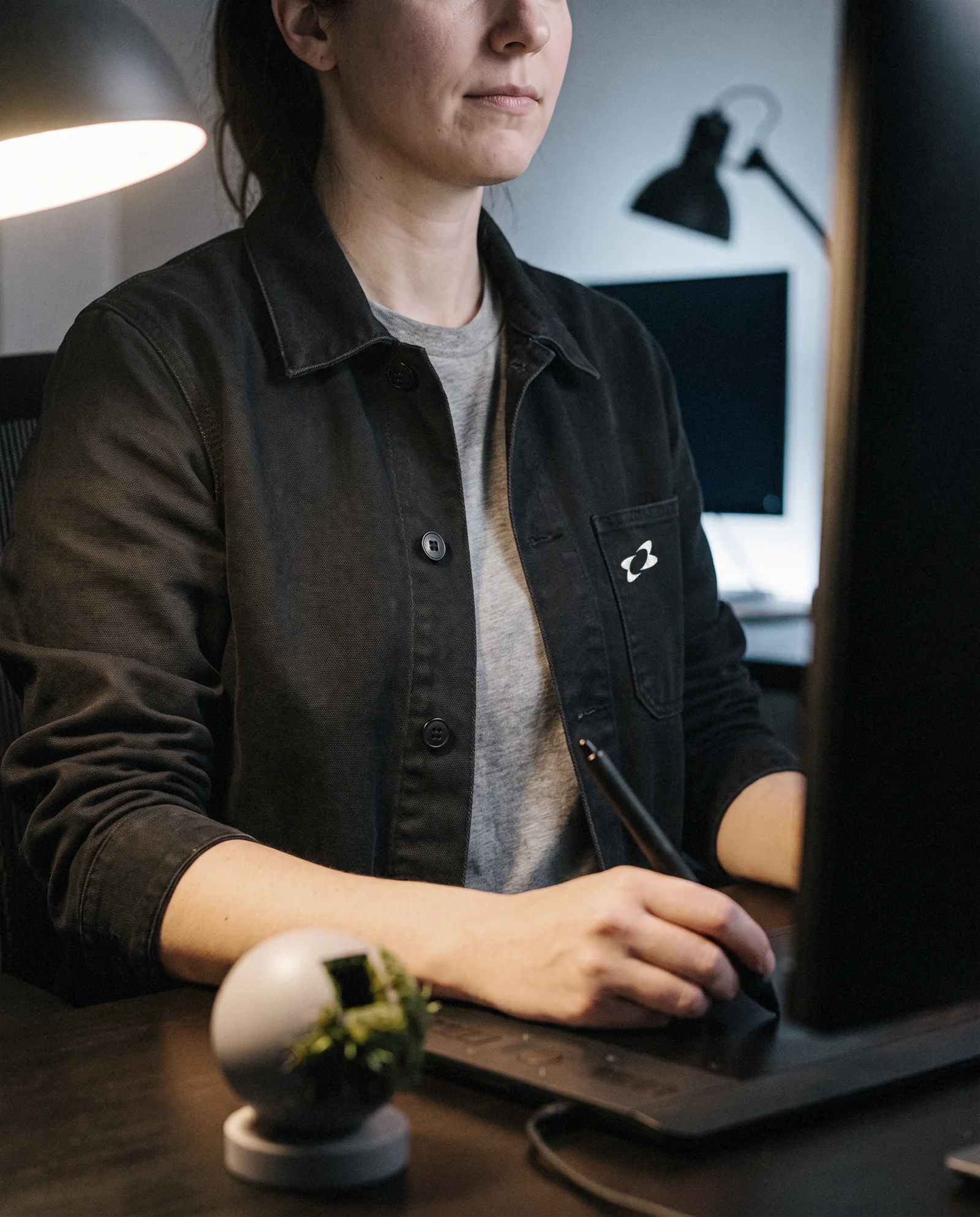
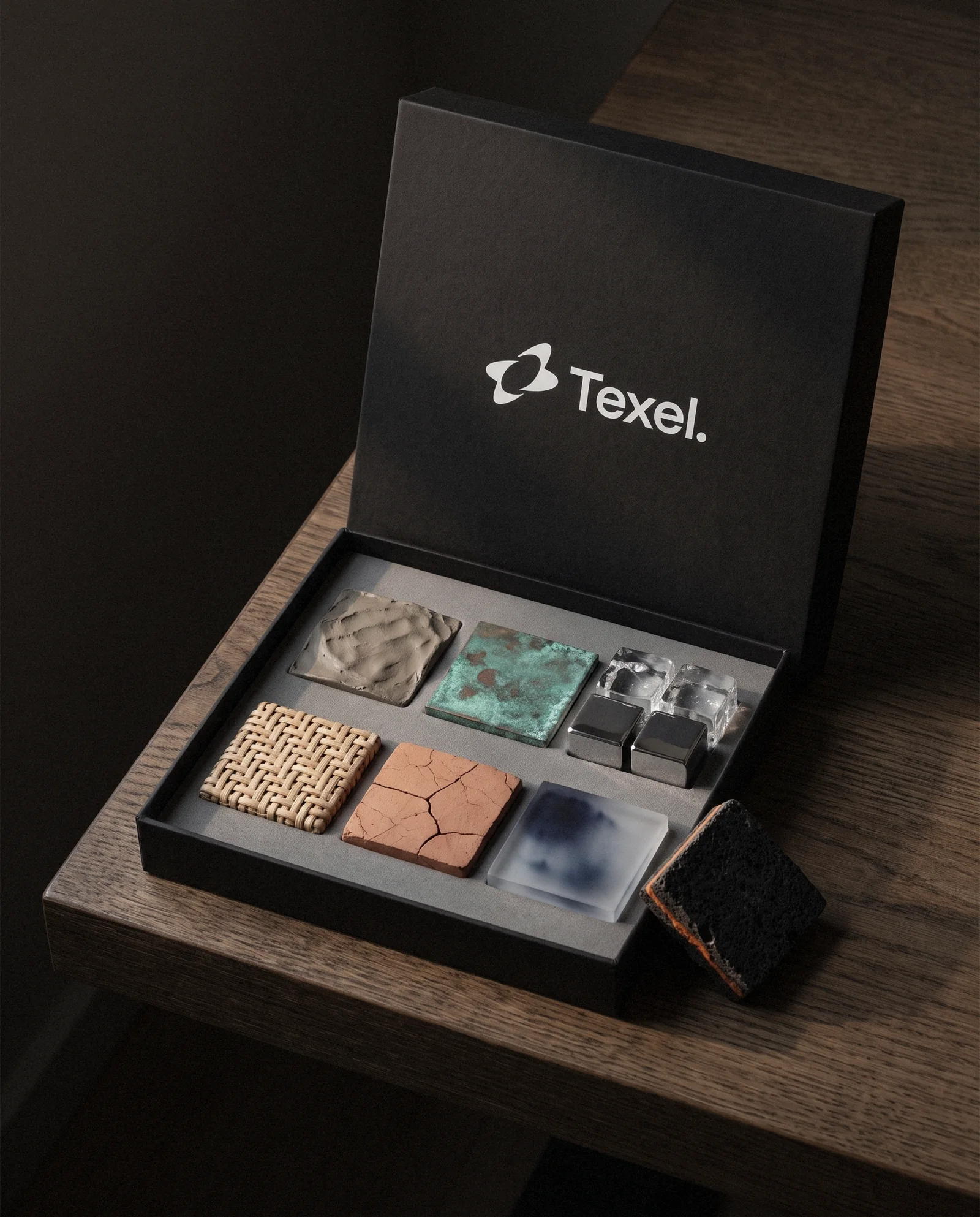
Book a call, get a price rangeTexel is a material API for game and film studios. A technical artist types a material, such as wet river clay, and gets the four maps that make it: albedo, normal, roughness and height, at 2,048 px, tiled and applied to the mesh inside their editor. We built it from scratch: the name, a world where one test object wears a different material in every piece, the editor panel, a logo that grows moss, and the launch on posters, a street hoarding, an artist's jacket and a box of material samples.
- Project
- An Alterra Studio project: we built the company's brand, product and launch from scratch
- Stage
- Generative 3D, Series A stage
- Services
- Naming, world and key art, lockup and 3D logo, editor panel UI, material set, posters, out-of-home and merch, animated board
- Tools
- Imagine (our in-house design app), Nano Banana Pro, Seedance, Blender, HyperFrames
The problem and the brief
Ten funded generative 3D homepages, and none shows the texture maps a technical artist checks before a material goes into a game.
Texel is a material API for game and film studios. A technical artist types a material, such as wet river clay, and gets the four maps that make it: albedo, normal, roughness and height, at 2,048 px, tiled and applied to the mesh. Its buyer is the head of art or technical art director at a studio.
The brief, in a founder's words: "Our API turns a typed material into a texture set that tiles and holds up in-engine, but our homepage shows a finished render and says 'in seconds', so the technical art director who checks us before a call never sees the maps they would judge us on."
The research
of visual and technical artists in games hold unfavourable views of generative AI, more than any other discipline.
of game industry professionals think generative AI is hurting the industry, up from 18% two years earlier.
of people at game studios use generative AI tools at work, against 58% at publishers, support and marketing firms.
Three doubts a studio's art team brings to the first call
- Technical art director
It will look good in a render and fall apart in-engine, with seams the moment it tiles.
- Head of art
My artists will refuse to use it, and I'll have bought a tool nobody opens.
- Lead artist
Everything it makes will look the same, and our game will look like every other AI game.
The strategy: show the maps, on the mesh, in the artist's editor
Every 3D artist judges a material on a shader ball. Texel's world is that ball, a sphere with one square cut out, in a different material in every piece. The product is the panel where a material arrives as four maps and lands on the mesh. Colour only ever comes from a material.
- Doubt 1 · Seams?
It will look good in a render and fall apart in-engine, with seams the moment it tiles.
Four maps, and the tiling checked
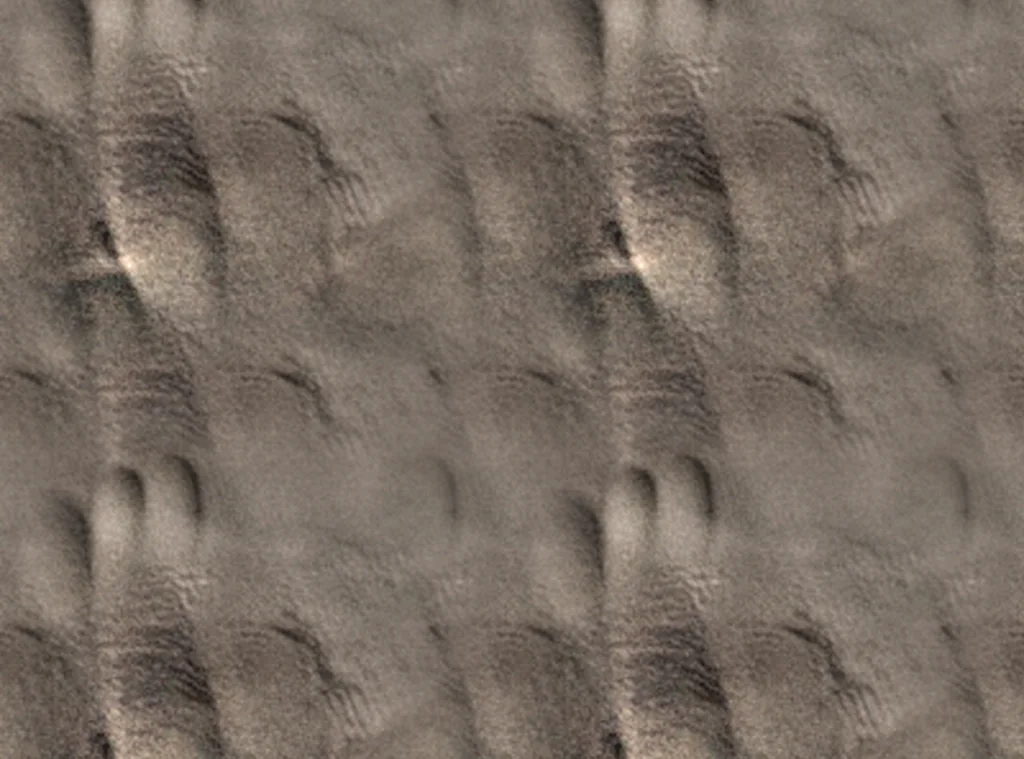
The panel returns the whole set at 2,048 px: albedo, normal, roughness and height, each labelled, with "Tiles seamlessly" under them. Tiled two by two, the clay albedo shows no seam.
64% of visual and technical artists in games view generative AI unfavourably. They judge a material by its maps, so the screen leads with the maps.
- Doubt 2 · Will they use it?
My artists will refuse to use it, and I'll have bought a tool nobody opens.
Docked in the editor they already use
Texel is a panel beside the viewport, in the editor the artist works in all day. The artist writes the material, looks at the maps and decides. The mesh only changes when they click Apply to mesh.
Only 30% of people at game studios use generative AI tools at work. A tool that sits in their own editor and waits for their click asks the least of them.
- Doubt 3 · Same look?
Everything it makes will look the same, and our game will look like every other AI game.
One form, any material
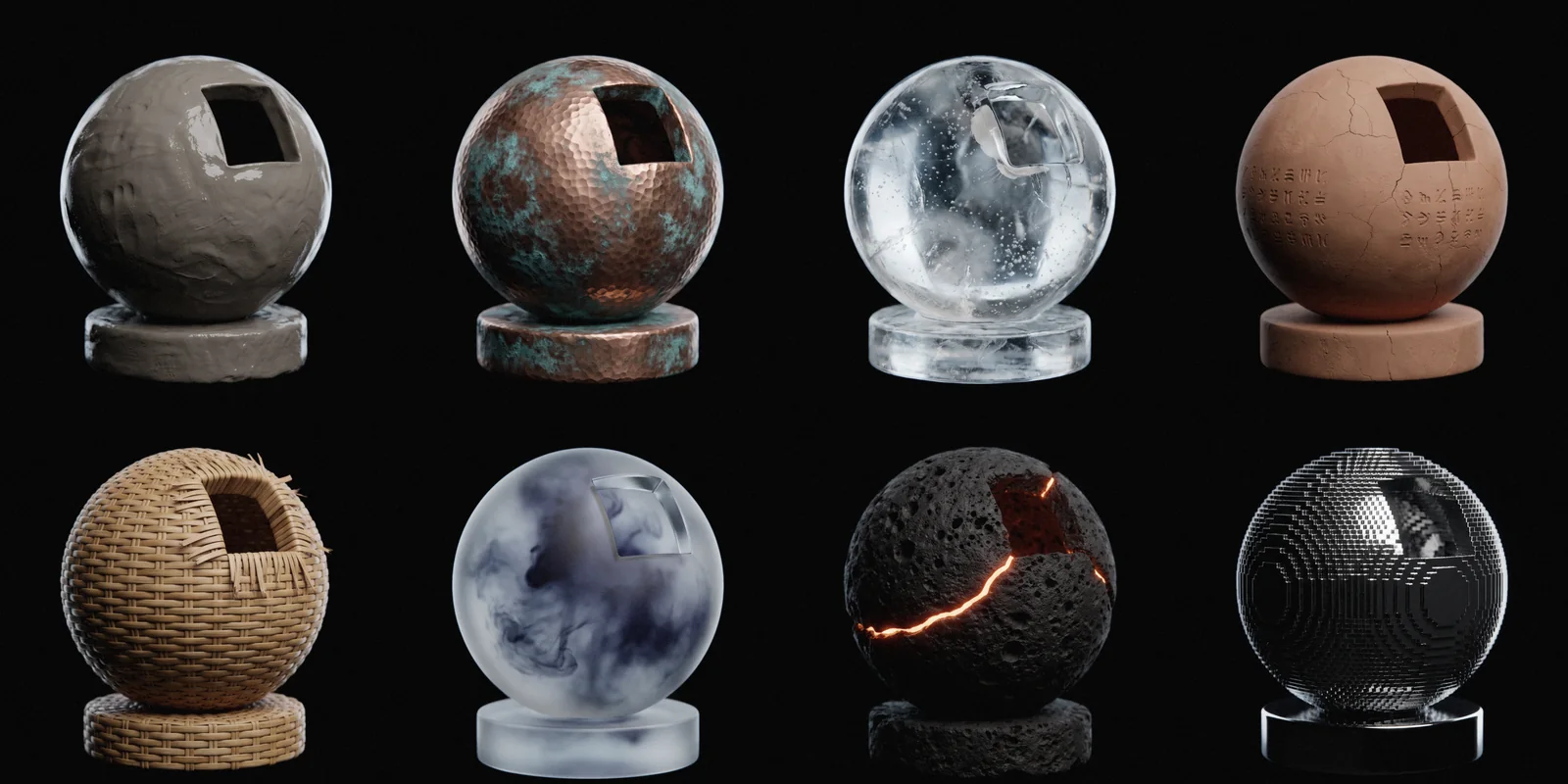
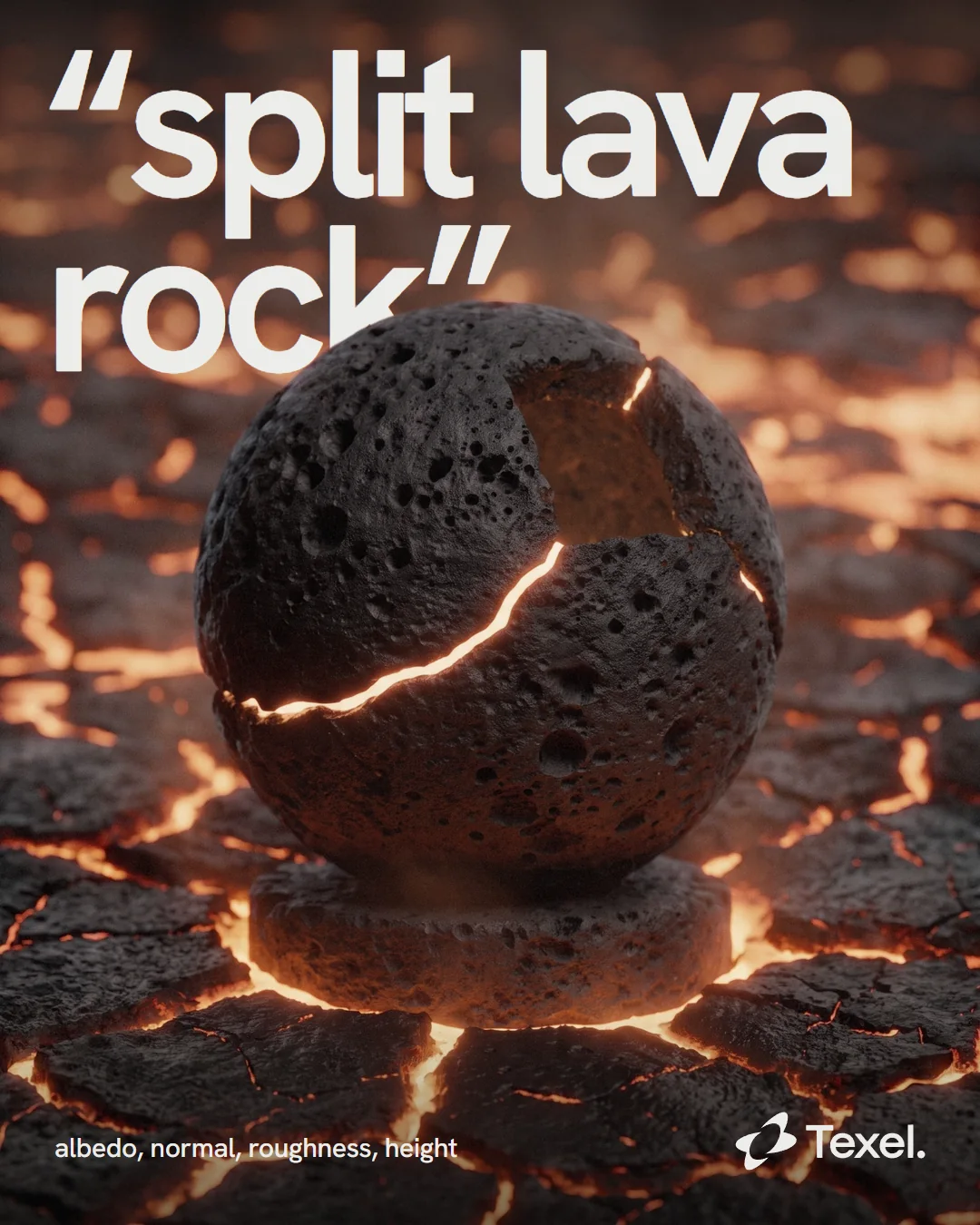
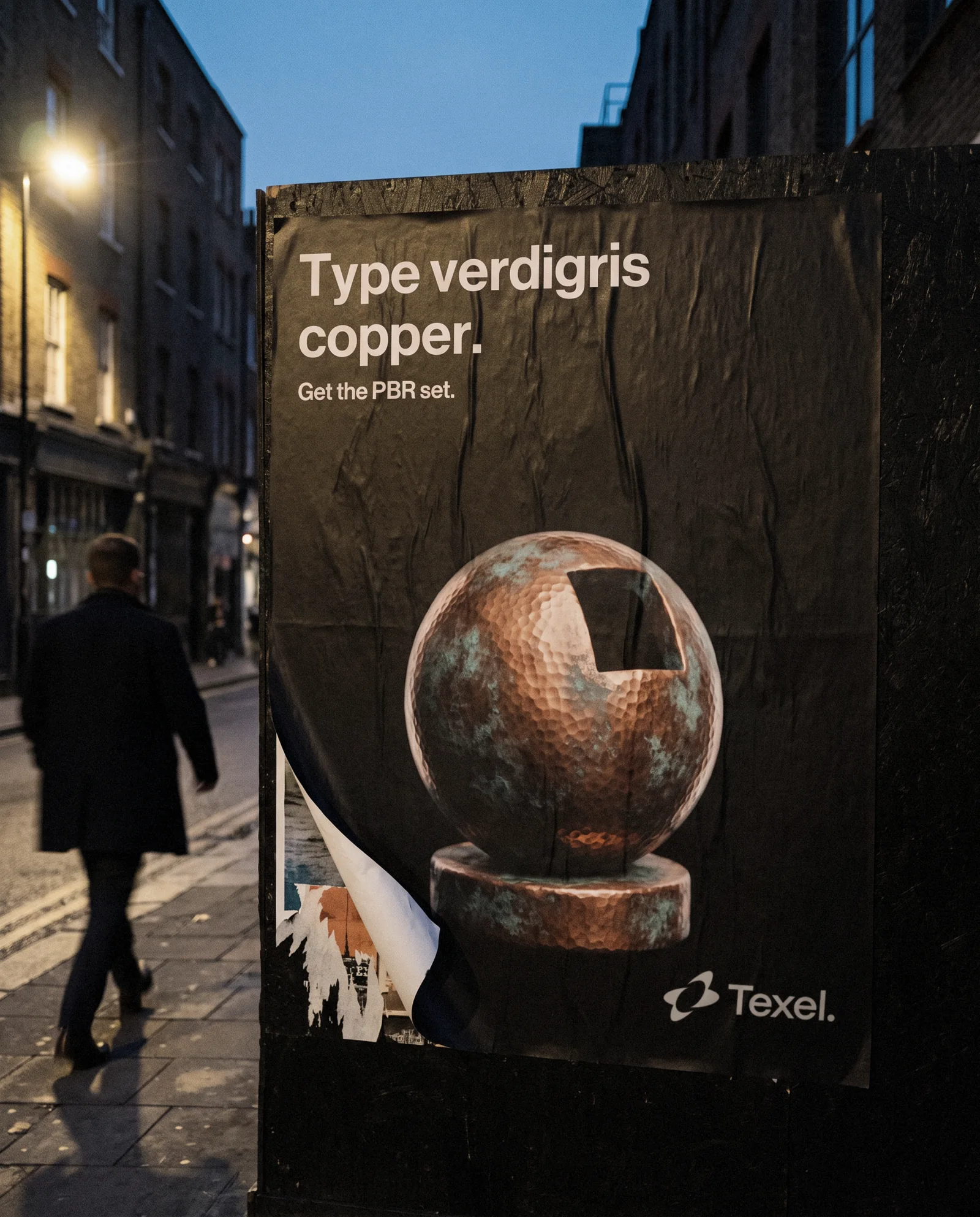
Each piece wears a different surface. One test object wears wet river clay, verdigris copper, glacial ice, glyph terracotta, rattan and lava, each from one typed line, so the look comes from what the artist writes.
Art direction belongs to the studio. Showing range on a single object proves the material follows the description, with no house style of its own.
The design system
Black for the ground, viewport grey for a mesh before its material, bone for type. Every other colour belongs to a material.
- Black #050505The ground
- Viewport grey #8A8A8AThe untextured mesh, before every material
- Bone #EDEDEAType and the lockup
- Living moss #5D6933The key art and the 3D logo
- Glyph terracotta #C58355The board's material cycle
- Glacial ice #4B6D82The ice poster
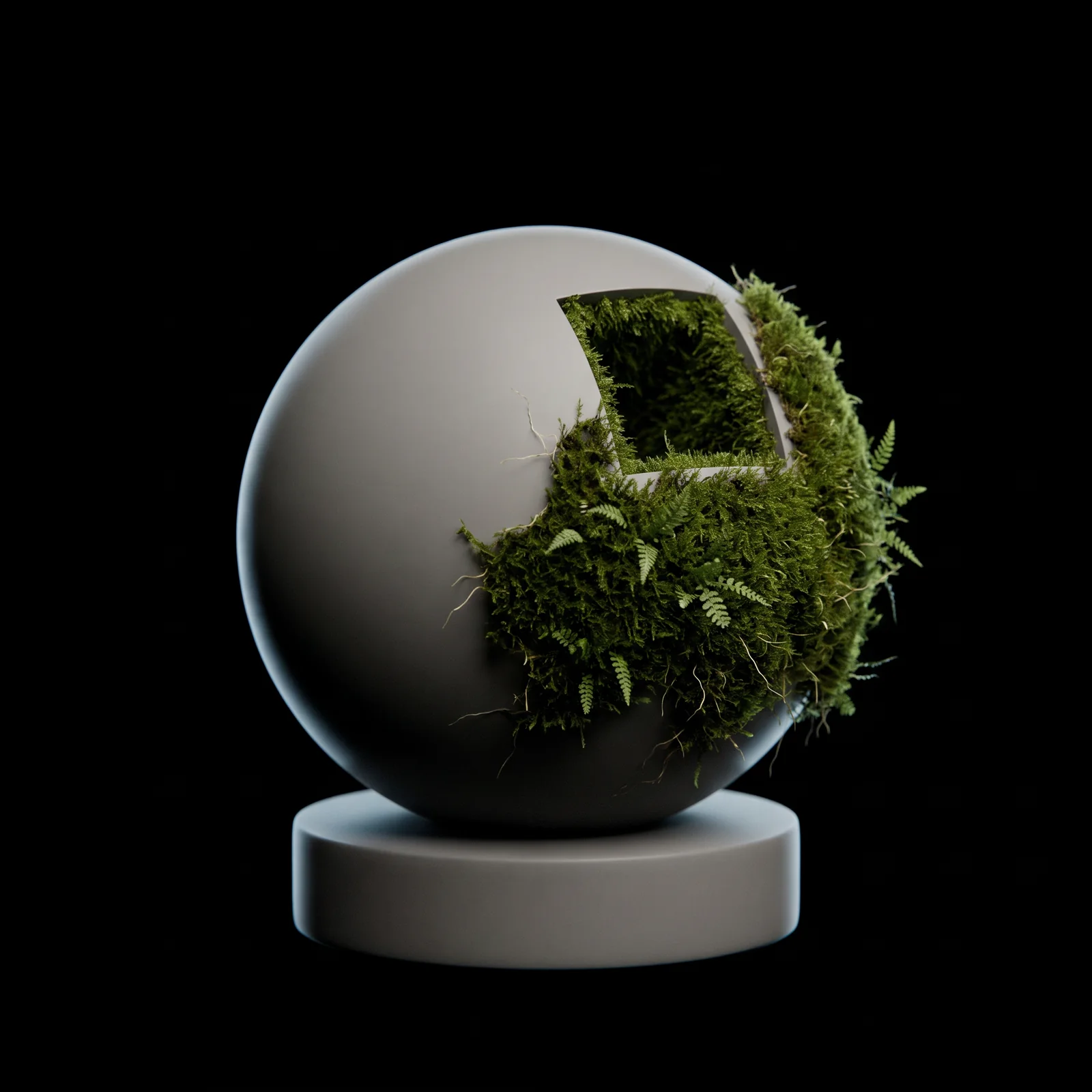
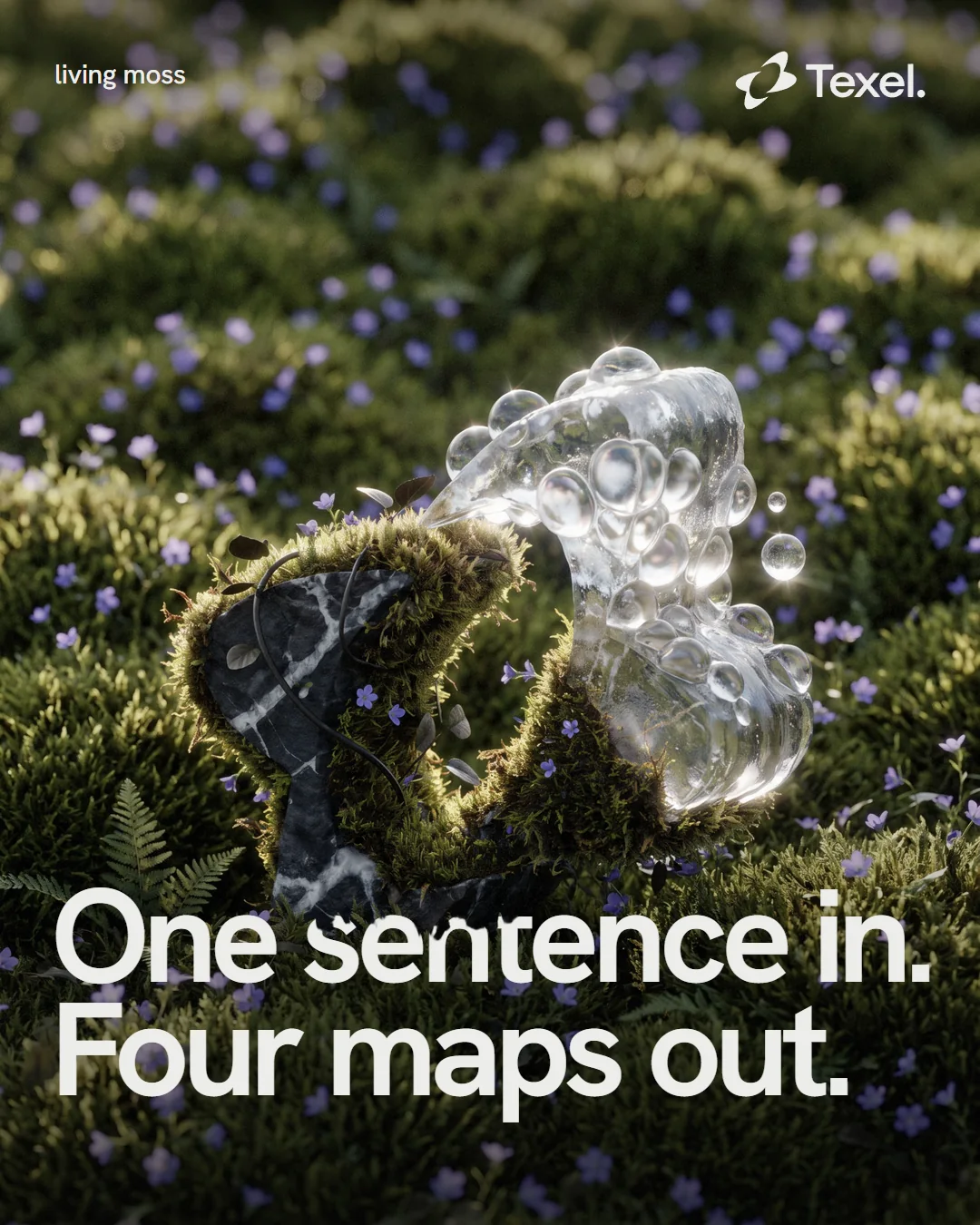
The world. One form, any material. Every 3D artist previews a material on a shader ball, so Texel's own test object, a sphere with one square cut out on a squat plinth, wears a different surface in every piece: moss, river clay, terracotta, ice, verdigris copper, lava.
Lockup and mark. Two curved strokes wrap an empty oval: a material wrapped around a form. The 3D version grows moss, flowers and glass bubbles, and in the wordmark each letter turns into a different material.
Type. Hanken Grotesk for every word, on the posters, the board and the editor panel, so the brand and the product read as one.
What we left out. 6 of 10 competitors open on a finished model, and 7 of 10 promise seconds or say no 3D skills are needed. None shows a texture set, and none takes its colour from a material.

The category audit
We scored 10 funded generative 3D companies on our startup homepage benchmark. Their sites are better than most, and none shows the texture maps behind its models.
Each homepage was scored on 12 criteria, 0 to 2 each, at 1440 and 390 pixels wide. The group averages 15.5 out of 24, above the 14.1 of our wider benchmark: 5 of 10 say what they do in five seconds at both widths, and 4 of 10 show the product on the first screen.
The gaps are the buyer and the material. Only 2 of 10 name the buyer on the first screen, 7 of 10 promise seconds or say no 3D skills are needed, and none shows a texture set. Those are the gaps Texel's homepage is designed to close.
- Company A79
- Company B79
- Company C71
- Company D71
- Company E67
- Company F58
- Company G58
- Company H58
- Company I58
- Company J46
- Benchmark average, 100 startups59
Alterra Studio startup website benchmark 2026. Companies are anonymised.
What we'd ship
For a real generative 3D material company, this is a Brand + Website Build.
- Brand
- Name check, world and key art, lockup and 3D logo, palette and type, and the rule that colour only comes from a material
- Website
- A homepage that opens on a material arriving as four labelled maps and landing on a mesh, with the buyer and the next step on the first screen, at desktop and phone width
- Product
- The editor panel, its four states and the material history in the brand
- Launch
- The animated board, the 3D logo and wordmark films, posters, a street hoarding, apparel and a material sample box
What's next
- Build the homepage opening on the panel run at 1440 and 390, and score it on the same benchmark.
- Answer the head of art on rights a page that says what the model was trained on and who owns what it makes.
- Show a studio's own mesh the panel applying a material to a production asset in the engine, beyond the shader ball.
The thinking behind it.
Guides on the decisions behind work like this, written by the team that did it.
All insights- Brand5 min read
How we turned our logo into a type family
We measured the Alterra wordmark, traced its five letters, and grew it into three display weights and a text companion. The grid, the rules and what we'd do differently.
- Brand9 min read
Startup brand identity examples, and why they work
10 startup brand identity examples from Linear, Vercel, Stripe, Figma, PostHog, Perplexity and more: the one specific choice each makes, why it works for its buyer, and how to brief your own.
- Brand8 min read
Is your brand ready for a Series A? A pre-raise checklist
Is your startup brand ready for a Series A? A pre-raise checklist across clarity, credibility, consistency and conversion, with research on first impressions and a timeline.
Want this for your company?
Book 30 minutes. We'll tell you what we'd change first in your brand and on your first screen, and what it would cost.
Book a call, get a price rangeCurious how your site compares?  Run the same audit on your site →
The brand in the feed
A mockup of how the brand would run on X. Not a live account.
Texel
@texelmaterials
Type a material. Get the texture set: albedo, normal, roughness and height, tiled, on your mesh. For game and film studios.
gettexel.comJoined October 2026
64 Following2,610 Followers
Pinned
Texel @texelmaterials · Oct 15
Meet Texel. One sentence in. Four maps out.
198861038K
Texel @texelmaterials · Oct 16
wet river clay, thumbprints, drying at the edges. Albedo, normal, roughness, height. 2,048 px. Tiles.
115242024K
Texel @texelmaterials · Oct 18
Type verdigris copper. Get the PBR set.
73128014K